Every day, Council on Aging and Senior Center professionals step into conversations that require equal parts compassion, patience, and resilience. They help older adults navigate grief, isolation, mental health challenges, family conflict, difficult life transitions, and complex community resources while maintaining healthy boundaries and caring for their own well-being.
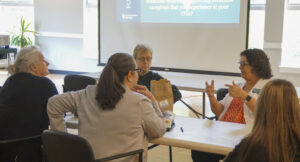 Now in its third year, MCOA’s partnership with McLean Hospital continues to provide behavioral health training designed specifically for Council on Aging professionals. Together, the organizations have built a professional development series that responds to the real-world challenges facing today’s aging services workforce.
During the past six months alone, more than 200 participants from over 75 Councils on Aging and aging services organizations took part in workshops focused on some of the most pressing issues facing staff today:
- Hoarding Disorder
- Compassionate Boundaries & Navigating Difficult Conversations
- From Isolation to Connection: Empowering Older Adults
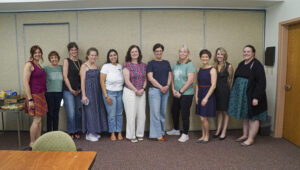 Each workshop was hosted by a local Council on Aging, creating welcoming learning environments where professionals could connect with peers, exchange ideas, and learn together in the very settings where they serve older adults every day.
Rather than focusing solely on theory, each session emphasized practical strategies that participants could put to work immediately. Through real-life case studies, role-playing, peer discussion, and evidence-based approaches such as Dialectical Behavior Therapy (DBT), attendees gained new tools to better support older adults while also protecting themselves from burnout.
The response was overwhelmingly positive.
Participants consistently described the trainings as some of the most relevant professional development they have attended.
“The training felt tailored to my job in a way no other training has.”
Many appreciated that the sessions acknowledged the emotional complexity of working with older adults while offering realistic, compassionate approaches to difficult situations.
“I left feeling like I had a toolbox of skills to try with people who cross boundaries.”
The emphasis on compassionate boundaries resonated deeply with staff across all roles. Participants shared that they learned how to remain empathetic while setting clear expectations, replacing reactive conversations with intentional communication, and reframing interactions using simple but powerful techniques.
One attendee summed up a lesson many found transformative:
“Two things can be true at the same time, replacing ‘but’ with ‘and.'”
Others highlighted practical communication strategies they were able to implement immediately.
“The instructors provided very relevant, actionable steps for better client interactions. I used some of the strategies with clients the very next day.”
The workshops also reinforced the importance of addressing social isolation, not simply as a social issue, but as a key component of health and well-being.
Participants valued learning small, meaningful ways to strengthen connection, foster self-confidence, and help older adults feel seen, heard, and engaged within their communities.
As one attendee reflected:
“The focus on small, practical shifts to build connection was especially helpful. The strategies are directly applicable and will help older adults feel more connected and confident.”
For many, the opportunity to learn alongside peers proved just as valuable as the curriculum itself.
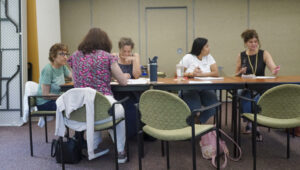 Sharing experiences, discussing real-world scenarios, and realizing that colleagues from more than 75 Councils on Aging and aging services organizations face many of the same challenges created a sense of connection and support.
“Knowing others in the room had similar experiences felt therapeutic.”
The trainings also attracted professionals at every stage of their careers, from seasoned outreach staff to those new to aging services.
One participant, who recently transitioned from a 25-year retail career into a COA role, shared:
“Working with the public is very rewarding. Having the opportunity to take these classes has been so helpful. Before, the saying was ‘the customer is always right.’ Now it’s about boundaries, and I feel I have much better control of my space when working with people.”
Perhaps the strongest endorsement came from participants who described the sessions as practical, engaging, and immediately useful.
“One of the best professional trainings I have attended.”
“Amazing and relevant content. Relatable to all of us every day.”
“I am grateful to MCOA and McLean for offering trainings on topics and situations that many of us struggle with. These sessions continue to put more tools in my toolbox, allowing me to be better prepared and often less stressed.”
 As the needs of older adults continue to evolve, so too must the skills of those who serve them. MCOA remains committed to providing professional development that is timely, practical, and grounded in the realities of everyday work.
The success of this third year of collaboration demonstrates the value of investing in the people who serve older adults. In just the past six  months, the partnership has equipped more than 150 professionals from over 75 Councils on Aging and aging services organizations with practical strategies, renewed confidence, and a stronger network of peers. Together, MCOA and McLean Hospital are helping build a more resilient, compassionate, and connected aging services workforce across Massachusetts.
With new topics already being explored for future sessions, this partnership continues to grow, ensuring that Council on Aging professionals have access to the knowledge, skills, and support they need to meet the evolving needs of older adults and their caregivers.