A collaborative initiative between MCOA, Mass General Brigham researchers, and local Councils on Aging is helping older adults take an active role in their brain health—with promising early results.
What happens when leading researchers partner with the people who know their communities best?
In Massachusetts, the answer is My Healthy Brain, an innovative initiative bringing evidence-informed brain health education directly into local Councils on Aging and senior centers.
Through a collaboration involving the Massachusetts Councils on Aging (MCOA), researchers from Mass General Brigham and Harvard Medical School, and local Councils on Aging in Duxbury, Easthampton, and Norwood, the initiative is exploring how research-based approaches to brain health can become practical, accessible community programs.
And the early results are encouraging.
Built With Communities, Not Just For Them
What makes My Healthy Brain particularly meaningful is the collaborative approach behind its development.
Rather than introducing a program without first understanding local needs, researchers worked alongside Council on Aging professionals, older adults, community organizations, and MCOA leadership to learn what would make brain health education relevant, engaging, and sustainable.
The process began with seven focus group conversations involving 50 participants, including older adults, senior center staff, and community leaders.
Their feedback helped shape everything from program delivery and technology support to participant engagement and opportunities for continued learning.
The three participating Councils on Aging brought essential knowledge of their communities, trusted relationships with residents, and practical experience delivering programs that respond to local needs.
This partnership combined the expertise of academic researchers with the knowledge and experience of local aging-services professionals—a powerful model for bringing research into everyday community life.
Turning Research Into Action: An Extraordinary 100% Completion Rate
The resulting eight-session My Healthy Brain program focuses on practical lifestyle habits associated with brain health, including physical activity, mindfulness, sleep, nutrition, mental stimulation, and social connection.
Participants explored strategies for incorporating healthier habits into their daily routines, set achievable goals, and used activity-tracking technology to monitor their progress.
But perhaps one of the most compelling measures of the program’s success was the extraordinary level of participant commitment.
60 Participants. 8 Sessions. 100% Completion.
Every single one of the 60 older adults who began the program across Duxbury, Easthampton, and Norwood completed all eight sessions.
A 100% completion rate is an exceptional achievement for a multiweek community-based program. It speaks to the importance participants placed on protecting their brain health, their enthusiasm for learning practical strategies, and the value they found in the My Healthy Brain experience.
It also reflects the power of collaboration. By combining research expertise with the trusted relationships, local knowledge, and welcoming environments of Councils on Aging, the initiative created an experience that participants remained committed to from beginning to end.
The message is powerful: When older adults are offered meaningful, accessible, research-informed programs that address their priorities, they don’t just sign up—they show up, stay engaged, and invest in their well-being.
That level of commitment is a milestone worth celebrating and a compelling demonstration of the potential for brain health programming in senior centers across Massachusetts.
Promising Results, Meaningful Impact
Early findings suggest that this collaborative approach is making a difference.
Moving More, Every Day
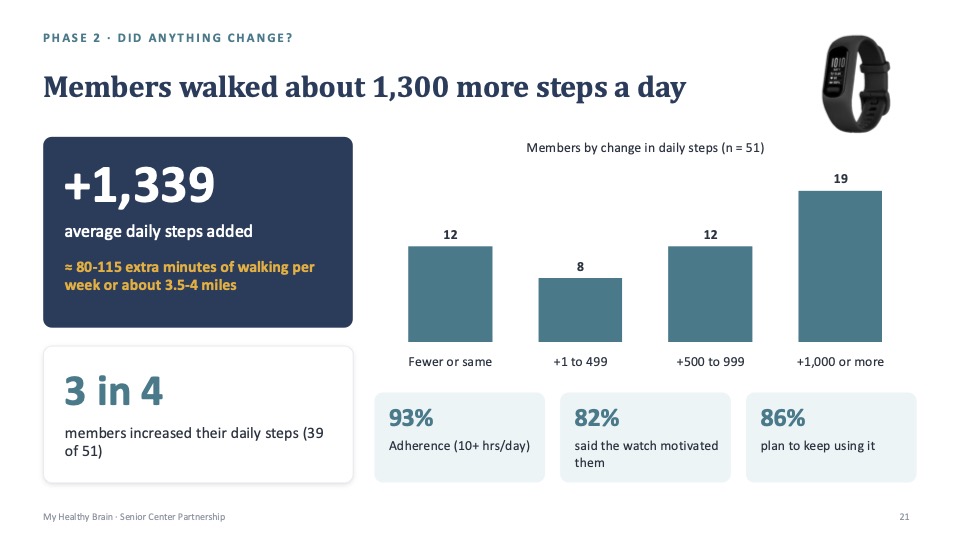
Participants with available activity data increased their walking by an average of 1,339 steps per day, with approximately three out of four increasing their daily steps.
Feeling Sharper and More Confident
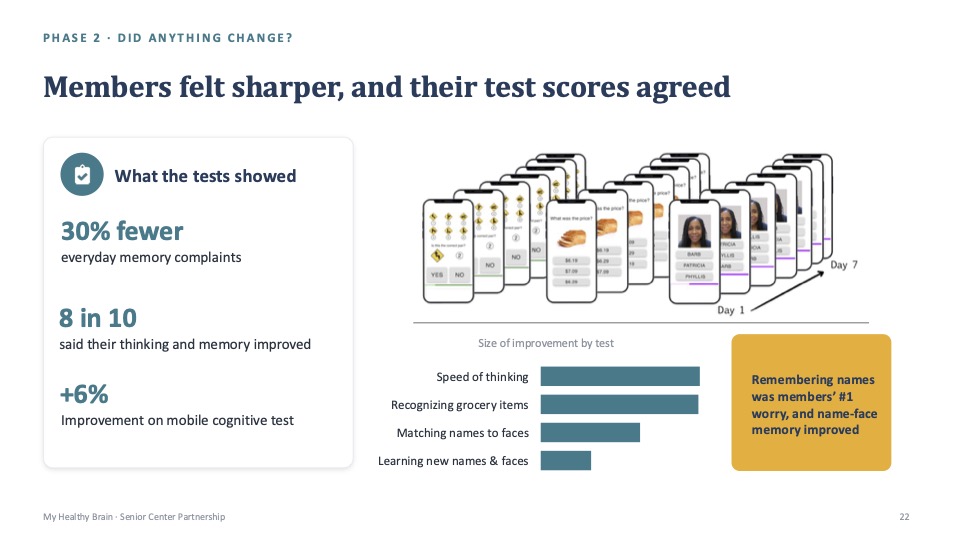
Participants also reported improvements in their thinking and memory, with eight in ten saying they noticed positive changes. Researchers observed improvements on cognitive assessments and a reduction in everyday memory complaints.
Building Healthier Habits
Additional findings included increases in physical activity, healthier eating habits, mindfulness practices, and mentally stimulating activities, along with reductions in reported depressive symptoms and feelings of isolation and loneliness.
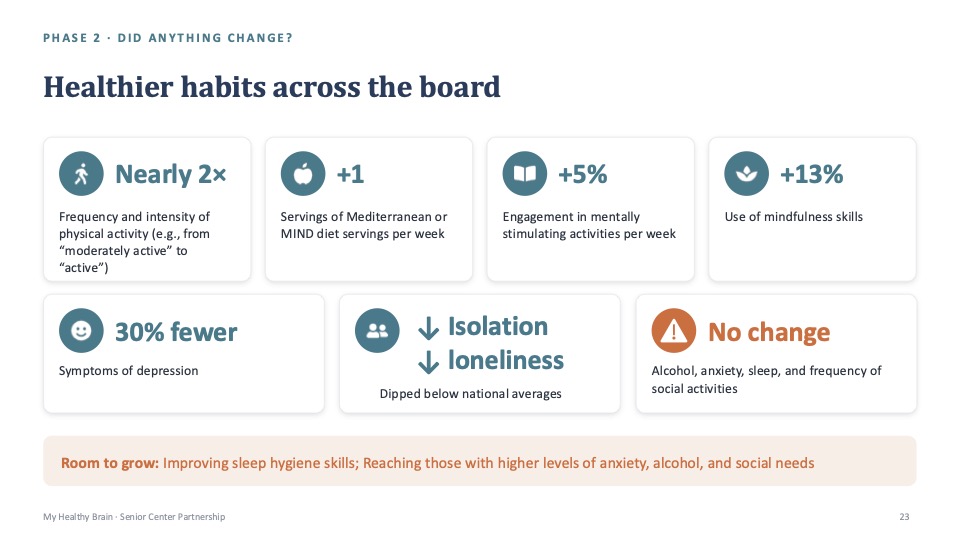
These early findings come from a small pilot and offer encouraging direction for future study, refinement, and expansion.
Strengthening Connections to Local Senior Centers
Beyond the health-related findings, the initiative revealed another important benefit: stronger connections between participants and their Councils on Aging.
More than half of participants reported feeling more connected to their senior center community, while others discovered programs and resources they had not previously known about.
For local Councils on Aging, this highlights an important opportunity.
Programs developed through research partnerships can do more than introduce new services. They can bring new people through the doors, strengthen relationships, and connect residents with additional opportunities for healthy aging and community engagement.
Growing Through Partnership
As My Healthy Brain enters its next phase, the focus is shifting toward training local senior center professionals to deliver the program and expanding opportunities for additional communities to participate.
The lessons learned from Duxbury, Easthampton, and Norwood will help inform that growth, ensuring that future programming continues to reflect the needs, resources, and experiences of local Councils on Aging.
The initiative demonstrates the value of bringing together academic expertise, statewide coordination, local knowledge, and the voices of older adults.
When research and community experience come together, promising ideas can become practical opportunities that make a real difference.
MCOA is proud to be part of this collaborative effort and grateful to the researchers, participating Councils on Aging, community partners, and older adults whose contributions are helping shape the future of brain health programming in Massachusetts.
My Healthy Brain is led by Ryan Mace, PhD, of Mass General Brigham and Harvard Medical School, in partnership with MCOA and participating Councils on Aging. The project received grant funding through the Massachusetts Executive Office of Aging & Independence.