Jun 5, 2025 | Economic Security & Outreach Blog, Housing, News
Many of you know all too well how the housing crisis is affecting vulnerable, low-income older adults in your communities.
Homelessness among older adults is expected to nearly triple by 2030, according to the authors of the study, Emerging-Crisis-of-Aged-Homelessness.pdf
One thing we can do is increase our knowledge of state-wide housing advocacy, such as the Older Adult Bridge Subsidy Campaign, sponsored by the MA Coalition for the Homeless, which supports the expansion of the bridge subsidy program.
The short-term housing bridge subsidy program, currently being piloted in Somerville, helps extremely-low-income older adult renters maintain their housing stability by providing them with rent assistance while they wait for placement in permanent, subsidized housing.
MCOA is supporting An Act Promoting Housing Stability for Older Adults across the Commonwealth (H.4025/S.475) please give this short bill a read and consider reaching out to your state legislators to voice your support and ask them to co-sponsor the bill.
May 15, 2025 | News
May 6, 2025 | Digital Equity, Economic Security & Outreach Blog, News
Low cost access to high speed internet is the main building block of digital equity. Are you observing older adult community members who are lacking access to essential services due to lack of access to the internet? Please consider sharing your experiences in written testimony!
Low Cost Internet Bill H.3527 & S. 2318, Virtual Hearing Tuesday, May 6th at 11am
Written testimony can be submitted via email to Benjamin Minerva at Ben.Minerva@masenate.gov and Caleb Oakes at Caleb.Oakes@mahouse.gov. The deadline to submit written testimony is Tuesday, May 13 by 5:00 p.m., go HERE for formatting details.
MA Healthy Aging Collaborative’s Executive Director, James Fuccione, provides these useful information points, should you choose to provide written testimony:
Potential Talking Points You Can Use to Draft Your Testimony
Tell the Joint Committee on Telecommunications, Utilities, and Energy why you and your organization are taking time to testify and what is your unique lens/experience on this topic.
- This bill does not ask the legislature to spend money, but instead proposes a private-based solution.
- Internet access is no longer a luxury.
- With services and staffing being cut due to federal funding cuts, more programs and contacts will be moved online, making it imperative that people be able to access the internet if phone or in-person availability is no longer an option.
- In a recent survey, 50% of MA respondents found it difficult to pay their internet bill.
- About 368,000 MA households (14%) received help from ACP before it ran out of funds. In some areas, 25% of households were enrolled in ACP.
- Nearly 1 in 10 MA households don’t have high-speed internet at home.
- High internet costs are the biggest barrier to residents having broadband at home.
- Rural communities across the commonwealth are stuck in a monopoly with their options for Internet companies – in all other instances, the government steps in and ensures that there is equitable access to the internet.
- The Supreme Court said that states can regulate the Internet. This is a new opportunity to ask internet service providers, who will also benefit from new customers, to pay their fair share in provide equitable, affordable internet.
- Ensuring Adequate & Equitable Service: Establishing a “minimum download speeds standard to 100 Mbps” ensures that the low-cost option provides genuinely usable high-speed internet, not outdated or insufficient service.
- Hidden Costs Disproportionately & Negatively Affects Low-Income Subscribers: Flat rate with taxes and fees included, ensures transparency and prevents hidden costs from burdening low-income users.
- Access to the Internet is now a necessity for everyday activities and essential for education, employment, leisure, business, public services, civic participation, and healthcare.
- 70,000 western Mass residents relied on ACP as their affordable Internet.
- There are parts of the state that have insufficient infrastructure and the costs have not been equally distributed. This evens the playing field for communities.
- ACCESS to the Internet is NOT an affordable internet.
May 2, 2025 | Economic Security & Outreach Blog, News
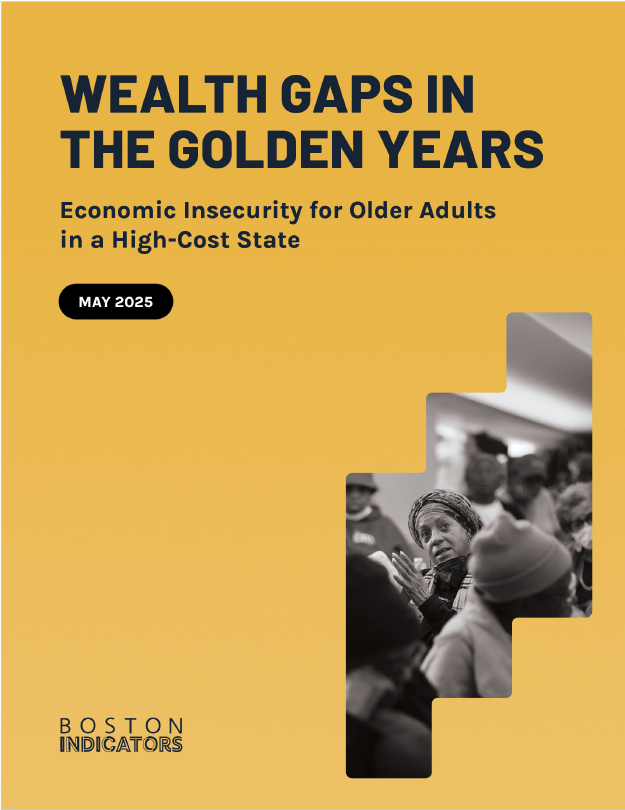
Wealth Gaps in the Golden Years: Economic Insecurity for Older Adults in a High-Cost State
By Kelly Harrington, Luc Schuster Boston Indicators. Laura D. Quinby, Center for Retirement Research at Boston College
May 1, 2025
Across the nation, many older adults struggle to make ends meet: the Elder Index from UMass Boston’s Gerontology Institute shows about 30 percent of older households lack the income needed to cover basic expenses and remain in their homes. Whether Massachusetts fares better or worse is unclear—while the state is relatively wealthy, its high cost of living and entrenched inequality leave low-income and older residents of color especially vulnerable. To shed light on these dynamics, this mixed-methods report by Boston Indicators in collaboration with Boston College’s Center for Retirement Research pairs a quantitative assessment—detailing income and wealth sources, the share of older households below Elder Index thresholds, and racial gaps in retirement security—with a qualitative study of structured interviews that reveal how low-income, low-wealth seniors stretch limited resources to make ends meet.
FIND FULL REPORT ONLINE HERE
Nov 8, 2024 | Age & Dementia Friendly, News
The 2024 Dementia Friendly Massachusetts (DFM) survey results indicated a strong interest in learning about grant funding opportunities. Several responses also pointed to a lack of financial support being a barrier to growing DFM initiatives. Here are some grant programs and funders that might be a fit for your ideas (each title is a link):
Categories of SIG grants are subject to change, but the FY25 categories most relevant to DFM work were for Memory Cafés, Age-and Dementia-Friendly initiatives, and Caregiver Respite. The link takes you to an overview of the FY25 grant timeline (starting in spring 2024), which will be similar for FY26.
Point32Health Foundation has an equity in aging focus. It supports programs that acknowledge and seek to remedy systemic barriers to better health. If your program idea would help meet needs of high-risk people within your community of older adults, it might be eligible for support. Inquiry forms are accepted at any time.
Community Foundations in Massachusetts are regional nonprofits that span the state and have various means of doing philanthropic work in their communities, either by giving grants directly or directing donors to organizations and programs that they endorse. Find out about the one close to you: if they give grants, and if your program ideas might be eligible.
Berkshire Taconic Community Foundation
The Boston Foundation
Brookline Community Foundation
Cambridge Community Foundation
Cape Cod Foundation
Community Foundation of Nantucket
Community Foundation of North Central MA
Community Foundation of Western MA
Essex County Community Foundation
Foundation for MetroWest
Greater Lowell Community Foundation
Greater Worcester Community Foundation
Martha’s Vineyard Community Foundation
South Coast Community Foundation
Watertown Community Foundation
LCC funds could support musicians and artists featured at Memory Cafés! Every municipality has an LCC that distributes MA Cultural Council money. Usually COAs partner with an artist who will write the grant and be the direct recipient of funds.
Providing small grants ($1,000-$20,000) to nonprofits and government entities for a broad array of programs or operating support. November 12 is the next deadline. Learn more on their FAQ page; they have not defined specific funding priorities.
We are keeping a growing list of these on the DFM website’s Resources page.
Nov 1, 2024 | Chronic Diseases, Economic Security & Outreach Blog, Fitness, Healthy Aging, Malnutrition, News, Nutrition
Important HIP News
Yes, it’s true. DTA announced it’s lowering the monthly HIP benefit for ALL SNAP households to $20 per month, starting December 1, 2024, so the program can run all year long. The program needs $25 million annually but was only funded at $15 million in the FY2025 budget. Learn how to maximize your SNAP benefits.
The Massachusetts Food System Collaborative’s Campaign for HIP Funding released a call to action asking advocates to call the Governor’s office and legislative leadership (Speaker of the House Ron Mariano, HWM Chair Aaron Michlewitz, Senate President Karen Spilka, and SWM Chair Michael Rodrigues), asking them to urgently dedicate $10 million in supplemental funding for HIP and to stop the cut. Email Rebecca Miller, Policy Director at the Massachusetts Food System Collaborative, at rebecca@mafoodsystem.org with any questions about this advocacy alert.
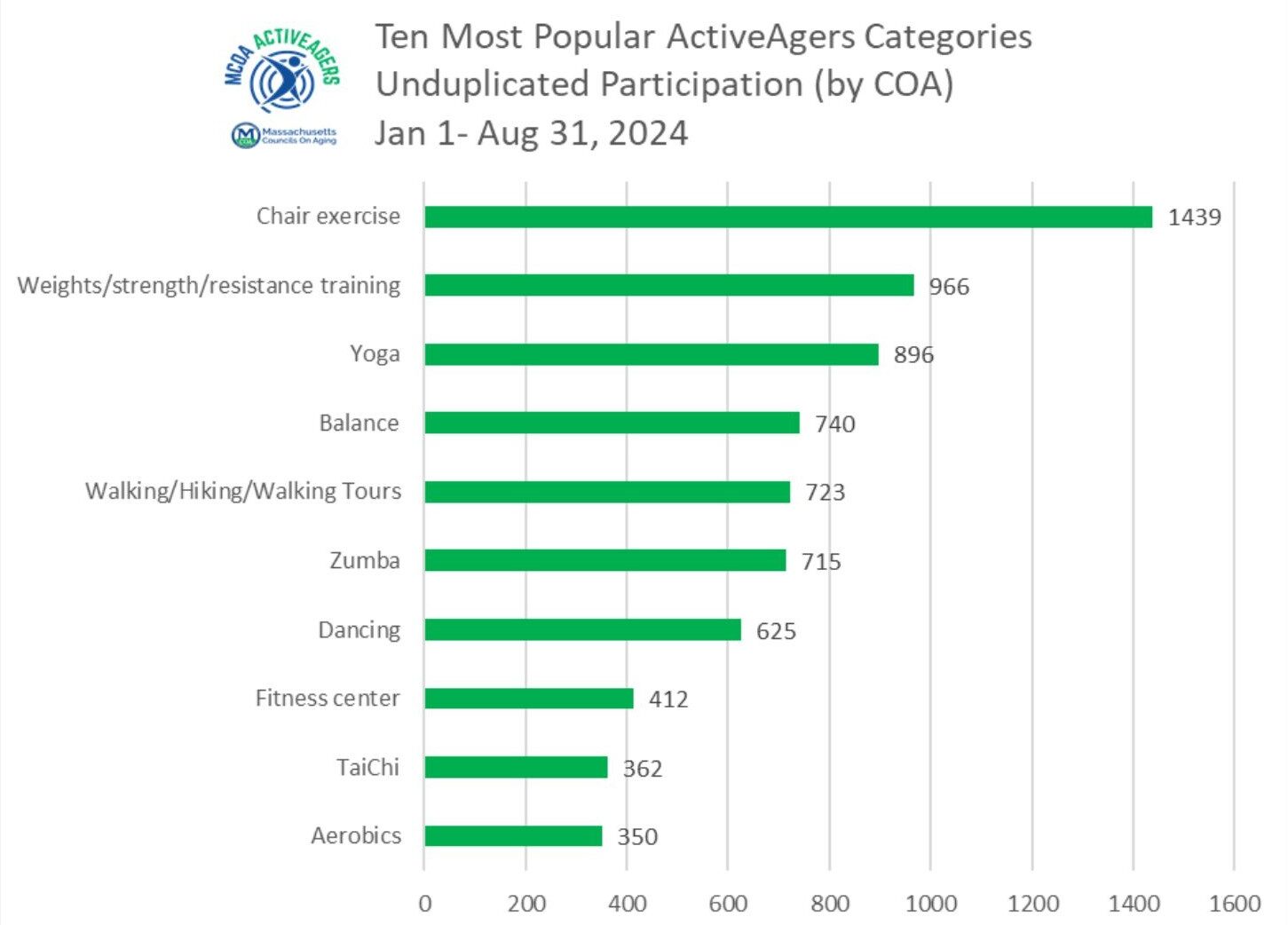
MCOA ActiveAgers runs all year long
Check out the (current) top ten statewide physical activity categories.
Even if you missed the September 15 deadline, you can still submit your data dating back to January 1. The more data we have, the more robust a picture we can share with the network. Even better, the second round of data covering September 1 – December 31 is eligible for prize drawings.
Review the MCOA ActiveAgers Toolkit or email tara@mcoaonline.org with questions.
Free Webinar Series
Prioritizing What Matters to Older Adults Living with Chronic Disease: This National Center for Equitable Care for Elders learning collaborative webinar series focuses on age-friendly approaches to encourage the development and maintenance of healthy lifestyle behaviors in older adults. Participants will discuss special considerations for chronic disease self-management in an aging population, including physiological changes and social risk factors. Upon application, you will receive the session 1 recording and slides– and join us live for sessions 2-4. Session Two: November 5; Session Three: November 19; Session Four: December 3, 2024. All sessions 2-3 p.m.
Older Adults Meal Funding is in Jeopardy (NANASP Updates)
- This is a crucial time for NANASP members to communicate with their Members of Congress, and share local data and stories from clients on the impact of funding challenges. Find your representatives here. In this current fiscal year, we have the first reduction in the Older Americans Act nutrition program in years with an $8 million overall cut. Neither the Senate nor the House proposal has restored this cut. This has to happen. Here’s what you can do:
- Your Voice Matters! Take our survey to share the impact of funding cuts on your program and clients. Your response is CRUCIAL for our advocacy efforts.
- Write to your Members of Congress to share with them how vital your program and services are for their older constituents. Make sure to share data and testimonies from your clients.
- NANASP and Meals on Wheels America, submitted a letter with 63 other national organizations to Congressional leadership advocating for $200 million in emergency (non-disaster) funding before the end of the year to address the growing waitlists for OAA senior nutrition programs. This funding would provide nearly 75 million additional meals and serve almost 650,000 more older adults. Congress is slated to return November 12th and has a lot on its plate. It has just one month to approve FY25 appropriations bills before the current Continuing Resolution expires on December 20th. The CR holds funding for all programs at FY24 levels and we are hoping for increased funding in the final FY25 bill.
- While we’re advocating for increased funding in FY25, there’s still money on the table your program may be eligible for. Pandemic-era State and Local Fiscal Recovery Funds (SLFRF) under the American Rescue Plan Act (ARPA) will disappear on December 31 if not used! This was allocated to state, local, Tribal, and territorial governments to use in providing assistance to nonprofits and others. What you can do: Use the National Council of Nonprofits’ guide to secure remaining funds before the December 31 deadline! This is separate from OAA-specific ARPA funds disbursed by State Units on Aging, which we will have an update on in our next bulletin.
Oct 17, 2024 | Age & Dementia Friendly, News, Public Health
We all know what it’s like to be mired in the day-to-day demands that make it increasingly hard to see the forest for the trees and to maintain the vitality of our connection to the meaning of our work.
But there are unique ideas and programs aiming to improve how we build a society that is livable for older adults that are brilliantly worthy of our attention. They encourage us to slow down and take the time to grow our compassion through the extraordinary experiences of others.
A couple programs of this nature came to my attention in the past week: Gold Coats and the living experiment that inspired the Human Forever documentary film (2024).
 Gold Coats
The Gold Coat program, based at the California Men’s Colony State Prison in San Luis Obispo, trains inmates to provide a high standard of care for their fellow inmates who are living with dementia and other cognitive disorders. Testimony from the Gold Coats provides extremely moving insight about the power of caring for others in the most trying circumstances.
Human Forever
 Teun Toebes, a 25-year-old Dutch nursing student and now an international spokesperson on dementia and healthcare innovation, lived in a closed ward memory care unit in a Dutch nursing home for three years. He wrote a book about that experience and then toured the world with independent filmmaker Jonathan de Jong to learn about international models of care and to create the film Human Forever (2024).
Teun Toebes’ book about his experiences: The Housemates: Everything One Young Student Learnt about Love, Care and Dementia from Living in a Nursing Home
Go ahead—give yourself permission to learn a little bit about creative and innovative ways to provide care and special experiences for people living with dementia.
Oct 4, 2024 | Economic Security & Outreach Blog, Health Insurance, Medicare, News
 Chances are if you’re an Outreach Coordinator you’ve helped someone with a MassHealth application: a daunting task under any circumstance.
The Massachusetts Health Care Training Forum provides regularly updated information via trainings to staff members of community-based agencies—including COAs—and health care organizations. Their trainings cover topics that either are directly related to MassHealth or are adjacent.
The MHCTF website hosts webinar videos and slide shows from past presentations such as:
- How to Apply for Long Term Care
- MassHealth 2023-24 Redeterminations and Renewals
- Understanding the Medicare Savings Program
- Understanding Immigration Requirements and Application Completion for Health Insurance Coverage in MA
There are opportunities to register for their live, virtual meetings. October’s offerings that could be useful to Outreach Coordinators and SHINE Counselors are:
- MassHealth & Health Safety Net Updates
- Medicare in 2025
- Disability Evaluation Services Overview & MassHealth
Click here to register for the MTF meetings
Sep 13, 2024 | Digital Equity, News
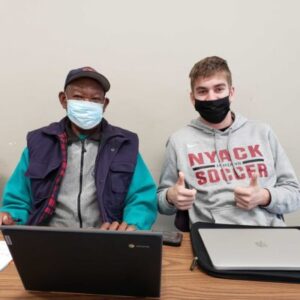 The digital divide experienced by many older adults in MA and the epidemic of loneliness have at least one relationship: access to one would alleviate the other. That is, the availability of low-cost, high-speed internet service would greatly increase human to human connectivity of isolated older adults. Another synergy that some COAs in MA are already utilizing is connecting young people—teens or college-age young adults—with older adults to provide tutorials in tech skills.
Little Brothers Friends of the Elderly in Boston is doing just that in public senior housing complexes. In their words, “LBFE Boston helps prevent social isolation by offering free, intergenerational, digital equity, and arts programs to older adults in public/affordable senior housing and community centers.” Tech access and training provides benefits such as mental stimulation, reduced isolation, empowerment, and skills needed for the job market, transportation, navigating medical appointments & records, and more.
Their Digital Dividends program offers instruction in Zoom, Google Maps, Uber/Lyft, AI tools, G-Suite (including Gmail), and Microsoft Office applications. Classes are held once a week for an hour, Monday through Friday, typically between 12 PM and 5 PM. Each older adult receives a free laptop and reliable internet access. With the support of younger participants, they build and expand their tech knowledge. In 2023 alone, Digital Dividends conducted more than 222 digital literacy training sessions in both English and Spanish. For a closer look, check out this recent story about one of their programs in South Boston.
Digital Dividends has been supported by a grant from the Massachusetts Broadband Institute and the state, administered through the Digital Equity Partnerships Program. Funds from this grant paid for Chromebooks and mobile hotspots for the older adult participants in these classes.
The need for programs like this is even more acute now that the federally funded Affordable Connectivity Program has come to an end (April 2024). COA staff serve people who lack personal access to high speed internet, and they see the disadvantages that come with that. A leader in this arena is the MA Healthy Aging Collaborative, which offers quarterly meetings on the topic of older adults and technology access, to which COA staff members are welcome.
Sign up for their newsletter to stay tuned for meeting dates, and check out the MHAC blog, which regularly offers pieces on digital equity and technology access for older adults. If you want to grow your understanding of this issue and what’s currently being done in Massachusetts to help older adults gain affordable broadband access and other important connectivity resources, read the Community Resources Guide: Technology Access and Programming for Older Adults (Sept. 2021).
Is your COA working on enhancing digital equity for older adults in your community? Are you harnessing the power of young people for this work? We’d love to learn about your creative efforts on MCOA’s InfoHub Forum!
Note: Photo used with the permission of LBFE Boston.
Sep 3, 2024 | Education & Training, Events, Member Services, News
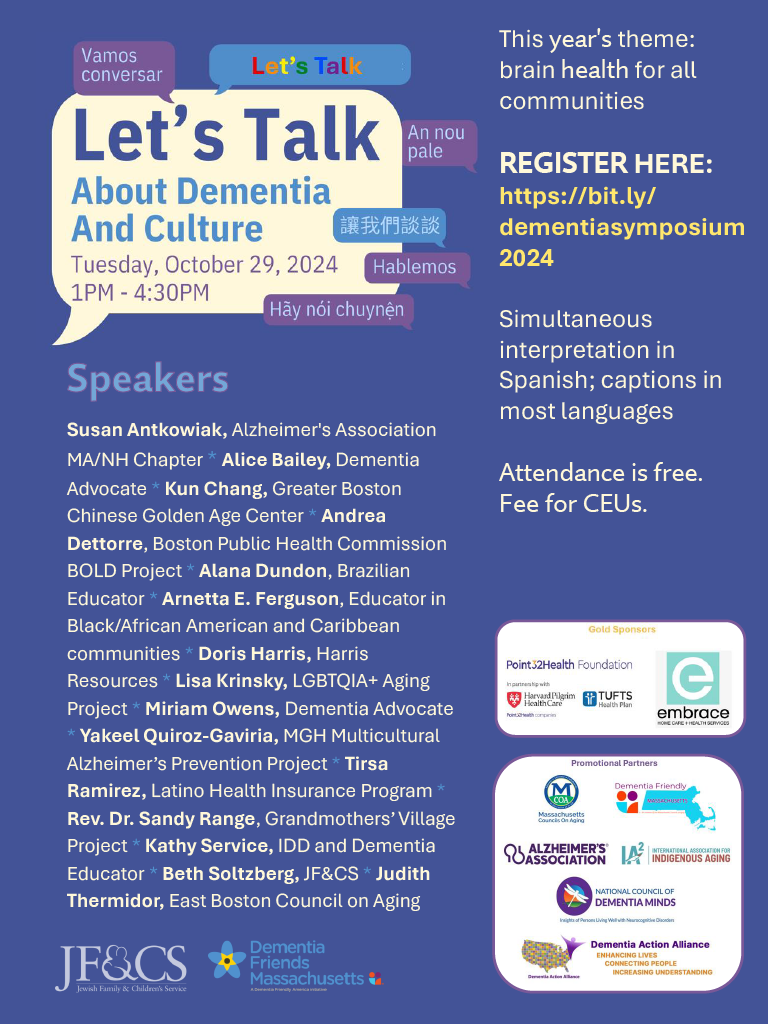
MCOA and Dementia Friendly Massachusetts are co-sponsoring “Let’s Talk about Dementia and Culture 2024.”
This virtual symposium is brought to you by Dementia Friends Massachusetts, and will be held on Tuesday, October 29, 1:00 p.m. to 4:30 p.m. on Zoom.
This year’s theme is: Brain Health for All Communities.
Join researchers, advocates living with dementia, public health leaders, and community-based dementia educators as we explore current evidence-based tips for brain health, how these link to the structural and social determinants of health, and what research and life experience tell us about continuing to live well with a dementia diagnosis.
Register in advance on Zoom here. Attendance is free. CEUs will be available for a fee – check here for updates. Simultaneous interpretation in Spanish, and captions in English and most other languages available.
Contact Beth at bsoltzberg@jfcsboston.orgwith questions.