Jun 25, 2025 | Aging Matters Newsletter, Healthy Aging
Arlington, Massachusetts, stands out as a community deeply committed to supporting its older residents, with nearly 30% of its population over age 60. At the heart of this commitment is the Arlington Council on Aging (COA), led by Executive Director Kristine Shah, and supported by a dedicated team including Social Worker Marci Shapiro Ide, LICSW. Since reopening its renovated center in 2022, the COA has seen a dramatic increase in engagement, more than doubling the number of people it serves.
“Our days are very unpredictable sometimes here, you never know what’s going happen,” Kristine shares, describing the dynamic nature of their work. From facilitating yoga classes to addressing housing crises, the Arlington COA team navigates a broad spectrum of needs, always striving to help as many people as possible.
 Marci Shapiro Ide, LICSW, a social worker at the Arlington COA, brings a unique background to her role. After years in philanthropy and even the state prison system, Marci sought a more direct connection with people. Her journey into supporting older adults, particularly within the LGBTQ+ community, was serendipitous. Recalling her initial foray into LGBTQ+ programming, Marci describes attending the LGBTQ+ aging conference: “It was the most amazing conference. I actually went 2 years in a row… how would you not love a conference where a drag queen greets you at the door?” This experience sparked a determination to bring similar inclusivity to Arlington.
A pivotal step was undertaking the “Open Door” training in 2013, offered by the LGBTQ+ Aging Project, which educated all COA staff, local clergy, and other non-profit professionals. A core outcome of this training was the development of a comprehensive welcome statement. This statement, which is still prominently featured in their newsletter and throughout the center, Kristine notes, “really speaks to how we value everybody in the community.” It serves as a visible and enduring symbol of the COA’s commitment, going beyond simple gestures like a rainbow sticker.
Initial LGBTQ+ specific programming, such as movie nights, took time to gain traction. “A lot of it didn’t work, or I would say attendance was very low,” Marci admits. However, persistent efforts, like partnering with the library for an off-site movie series and hosting the intergenerational “Sage Table” meals, gradually built a stronger sense of community. Marci also recalls that identifying the LGBTQ+ community as an underserved population around 2012 by the National Council on Aging (NCOA) was crucial. She explains, “obviously, it’s not a great thing to be identified as underserved, but it provides more guidance and weight when you’re developing programs.” This recognition enabled the COA to secure funding and further legitimize their inclusive initiatives. The virtual shift during the COVID-19 pandemic, surprisingly, led to a “huge spike” in participation for their LGBTQ+ online groups, with up to 20 people attending weekly. This underscored the profound need for connection.
 Over the past decade, Arlington has seen a notable shift in attitudes. Kristine observes that non-LGBTQ+ individuals are becoming more comfortable attending programs that haveLGBTQ+ themes, like a movie about Abraham Lincoln’s relationships. “I think people were afraid to come to that type of a movie 12 years ago, it was a, ‘I don’t want to be in that room with people who might think that I’m watching it because I’m gay.'” This growing comfort has fostered a more integrated environment where affinity groups remain valuable but individuals also feel secure joining any class or activity.
Marci highlights that despite Arlington’s generally inclusive nature, some barriers for LGBTQ+ individuals persist, often stemming from historical societal pressures. Many older LGBTQ+ adults may have aged without a legal spouse or children, leading to limited support networks for critical needs like caregiving or designating a healthcare proxy. “There’s a lot of LGBT older adults who have been unmarried or single, and don’t have the support of a partner as they age and all of their friends are similar ages also dealing with age related health issues.” She further elaborates on the challenges when trying to identify support systems for these individuals: “ Financially, I’ve seen that it varies and there are many people for whom finances are not an issue. Many LBGTQ+ individuals can pay for the care they need as long as they know where to get it.” This emphasizes the crucial role COAs play in providing connection and resources.
When asked how other centers can replicate Arlington’s success, Marci points to ongoing collaboration and shared learning. She recommends the monthly programming meetings hosted by the LGBTQ+ Aging Project, a resource advertised by the Massachusetts Councils on Aging (MCOA). She also champions the concept of an inclusive welcome statement and a gradual, consistent approach to integrating LGBTQ+ affirming activities. Marci adds a practical tip based on her experience: “I started partnering with the library. And we did a movie series. And that was one of my most popular programs.” This strategy of leveraging existing community resources for outreach proved highly effective.
Here are key takeaways for other Councils on Aging:
Top Strategies for Councils on Aging to Foster Inclusivity and Welcome
- Develop and Prominently Display a Welcome Statement: Craft a statement that clearly articulates your COA’s commitment to valuing every community member, regardless of identity. Post it in your facility and include it regularly in your communications. Kristine shares that this statement “really speaks to how we value everybody in the community.”
- Utilize Training and Educational Resources: Engage with programs like the “Open Door” training from the LGBTQ+ Aging Project. Educating staff and the broader community is fundamental.
- Start Slowly and Build Momentum: Begin with one or two targeted programs and assess what resonates. Initial attendance may be low, but consistency and thoughtful outreach will build trust and participation over time. Kristine noted, “It just took time to build it.”
- Partner with Community Organizations: Collaborating with local libraries, LGBTQ+ organizations, or even high school GSAs (Gay-Straight Alliances) can expand your reach and offer diverse programming. Marci highlights that her collaboration with the library for movie series “was one of my most popular programs.”
- Leverage Recognition of Underserved Populations: If a community is identified as underserved, like the LGBTQ+ community was by NCOA, use that recognition to advocate for and secure funding for specific programming. Marci explains, “It gives a lot of weight when you’re developing programs.”
- Integrate, Don’t Segregate: While affinity groups have value, strive to integrate LGBTQ+ content and inclusivity into mainstream programming. This normalizes acceptance and broadens participation. Kristine observes, “We’re seeing people feel much more included, saying things like, ‘I can come to this movie,’ and ‘I can go to the yoga class,’ without the need for a separate LGBTQ+ mindfulness class as long as there still time and space for affinity groups.“
- Embrace and Highlight Inclusivity in All Communications: Clearly state that events are open to “LGBTQ+ individuals and friends” to signal a welcoming environment for allies and family members. Kristine explains this approach: “Once people realized that LGBTQ+ seniors and their friends are hosting a party everybody’s welcome to come.”
Arlington’s journey exemplifies how dedication, strategic programming, and a genuine commitment to welcoming all members can transform a Council on Aging into a vibrant, inclusive hub, fostering essential connections and combating isolation for everyone in the community.
Jun 25, 2025 | Aging Matters Newsletter, Healthy Aging
Lisa Krinsky, Director of the LGBTQIA+ Aging Project at Fenway Health, has dedicated 21 years to fostering inclusive environments for LGBTQ+ older adults in Massachusetts. Her journey began in the ASAP network where she quickly identified a critical gap: the lack of support and visibility for LGBTQ+ individuals as they age. This realization propelled her into a pioneering role, working at the intersection of aging services and the LGBTQ+ community.
 Krinsky’s early work highlighted a significant challenge: simply updating forms to include questions about sexual orientation or gender identity wasn’t enough. As she explains, “You can’t just change the forms. You have to train people. You have to help support them, be successful in doing their jobs.” This understanding led to a focus on comprehensive training and technical assistance for Aging Services Access Points (ASAPs) and Councils on Aging (COAs). The goal was to help organizations “get your house in order” by examining everything from employee and consumer policies to marketing and outreach.
One key to success has been collaborative efforts. Krinsky recalls instances where the Aging Project would partner with COAs, leveraging their own standing in the community to build trust. “We would leverage our position in the community to help build relationships and have people come through the door and feel safe,” she says. This approach allowed LGBTQ+ individuals to feel secure enough to engage, eventually no longer needing the Aging Project’s direct involvement.
Despite progress, barriers persist. Krinsky notes that some COAs initially believed they had no LGBTQ+ members, asking, “Why should we do a program?” She emphasizes that a proactive approach is crucial: “If you wait for people to show up on your door, it’s very different than being proactive.”
A significant stride in overcoming these barriers came in 2018 with first-in-the-nation legislation requiring LGBTQ+ training for all entities contracting with Massachusetts’ state unit on aging. This ensures a baseline understanding of inclusive practices across the network. More recently, in the past year, legislation passed establishing an LGBTQI+ Bill of Rights in long-term care, codifying protections and respectful treatment for this population.
While these legislative changes are vital, Krinsky stresses that true inclusivity requires ongoing effort and a shift in mindset. She offers five key recommendations for COAs looking to become more welcoming and affirming:
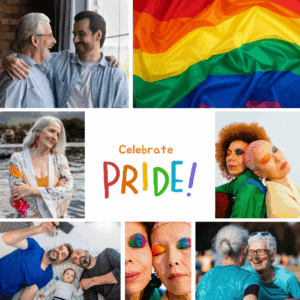 Ways Councils on Aging Can Foster LGBTQ+ Inclusion
- Commit Resources and Build Foundation: Don’t just jump into programming. Dedicate staff time, financial resources, and physical space to cultivate an inclusive environment. “Putting that infrastructure time in and commitment is what will help you be successful,” Krinsky advises.
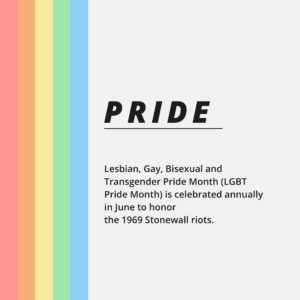
- Integrate Messaging into Regular Communications: Make it clear to everyone that your COA is welcoming. During Pride Month, or anytime during the year, include a statement in your newsletter celebrating LGBTQIA+ individuals and emphasizing the COA’s commitment to inclusivity. This not only invites LGBTQ+ folks but also informs non-LGBTQ+ members about the COA’s values, setting a tone that discourages discriminatory behavior. “It’s about letting everyone know, LGBTQ+ and non-LGBTQ+ members alike, that this center operates on principles of respect and belonging for all.”
- Increase Visibility: Simple visible gestures can make a big difference. Display a rainbow flag or sticker in your senior center, or encourage staff to wear rainbow pins on their ID badges. These small signs send a powerful message of welcome.
- Weave LGBTQ+ Content into Existing Programming: Don’t relegate LGBTQ+ topics just to Pride month. If you have a movie series, show a film like “Milk” during June or October (LGBTQ+ History Month). For book clubs, include books by LGBTQ+ authors or those exploring LGBTQ+ themes throughout the year. “It’s not just, ‘Oh, we do this in June,'” Krinsky emphasizes. “I really hope that they’re not just segregated to that one time in the calendar and that you’re able to incorporate that into your overall programming.”
- Be Prepared for Resistance: Understand that not everyone may immediately embrace these changes. Some individuals might express discomfort or even hostility. Being prepared for such reactions and having a clear stance against discriminatory behavior is essential.
The journey toward full inclusion is ongoing, and as Krinsky’s work demonstrates, it requires dedication, strategic planning, and a willingness to proactively create spaces where all individuals as they age feel safe, seen, and celebrated.
What steps is your Council on Aging taking to be more welcoming and inclusive to all members of your community?
If you are interested in learning about how your COA can be more LGBTQ+ inclusive reach out to Lisa Krinsky at lkrinsky@fenwayhealth.org
May 27, 2025 | Aging Matters Newsletter, Mental Health
At our local Councils on Aging (COAs) and Senior Centers, you’ll find dedicated individuals who are often the first point of contact for older adults navigating life’s complexities. These compassionate professionals are more than just guides to resources; they are listeners, problem-solvers, and often, a steady presence in times of distress. The Massachusetts Councils on Aging (MCOA) recognizes this vital role, and their “Behavioral Health Training” series, in partnership with McLean Hospital, is designed to empower COA staff with the specialized tools they need.
We recently spoke with Amanda Kirk, a Licensed Social Worker at the Beverly Council on Aging, who enthusiastically attended the training series. With five years under her belt at the COA and a background in social work, Amanda came into the training with a solid foundation. Yet, she found immense value in MCOA’s commitment to ongoing learning. “I love ongoing training,” Amanda shares, “I think it’s really important to keep learning and to take your experience and mesh it with new training, understanding new research.”
What truly drew Amanda to this series was the caliber of the instructors. “An opportunity with McLean, with doctors and a social worker from McLean, you can’t turn that down. It’s incredible to have this renowned hospital and program available for COA staff to learn from these professionals in the mental health field.”
 Unpacking the “Iceberg” and Embracing “BIG”
For Amanda, the most impactful takeaway wasn’t just about new clinical content, but a deeper understanding of the human element in every interaction. She highlighted the powerful analogy of the “iceberg,” emphasizing that while older adults present with certain immediate concerns, there’s often a rich history and a multitude of unspoken factors beneath the surface.
“I loved when the trainer said that as a social worker, as whoever we are as providers, we offer the same thing; education, and who you are at the moment. You need to be aware of other factors in our own lives when working with someone. This profound reminder fosters empathy and encourages staff to look beyond the immediate presentation of a situation.
A cornerstone of the training that Amanda immediately put into practice was the “BIG” acronym: Boundaries, Integrity, and Generosity. She even has a sticky note on her computer as a constant reminder. “I really appreciated that, because thinking about who you are as a person in the moment, what you bring, really does affect that outcome. “This framework helps COA staff navigate complex situations with both compassion and professional clarity.
Navigating Crises and Long-Term Needs
COA staff are often the first to hear about a wide range of needs, from immediate crises to persistent behavioral health challenges. Amanda noted that while crises naturally grab attention, the training underscored the importance of addressing long-term mental health needs that individuals may have carried for years. “People with longer-term mental health challenges also should be getting that kind of attention and intervention.”
The training augmented Amanda’s existing de-escalation skills by reinforcing the power of a “warm handoff” during referrals. Instead of just providing a phone number, the emphasis was on connecting clients directly with a named contact, ensuring a smoother transition and fostering a sense of respect and follow-through.
The Unspoken Power of Self-Care and Shared Understanding
The self-care component of the training also proved incredibly impactful for Amanda. In a profession known for its potential for burnout, the validation offered was invaluable. “If you are feeling stressed, or if you are feeling worn out, or if you’re feeling sad because of a loss, etc., that’s all very normal. You’re not supposed to go through a career or a helping profession unaffected.” This normalization encourages COA staff to prioritize their own well-being, recognizing it as essential to their ability to help others.
Perhaps one of the most heartwarming aspects of nse of community it fosters. “It was very validating. It was very normalizing. ‘Oh, you experienced that at your COA as well.’ It was really helpful to hear other towns that struggled with it.” This shared understanding creates a supportive network among COA professionals across the state, reminding them they are not alone in the vital work they do.
MCOA’s “Behavioral Health Training” series is clearly more than just a series of workshops. It’s a testament to MCOA’s commitment to empowering COA staff, equipping them with essential knowledge, fostering self-awareness, and building a stronger, more connected network of care for older adults across Massachusetts.
May 27, 2025 | Aging Matters Newsletter, Mental Health
For Emily Kuhl, a seasoned case manager at The Newton Cooper Center (Newton Older Adult Services), the recent “Behavioral Health Training” series offered by McLean Hospital and the Massachusetts Councils on Aging (MCOA) wasn’t just another professional development opportunity; it was a profound affirmation and enhancement of her 18 years in the aging field. Having attended all sessions, Emily’s insights highlight the invaluable impact this training has on COA staff, regardless of their background.
Emily, a licensed mental health counselor, has always sought ways to improve her practice. “I’m always looking for trainings that just help me improve upon what I do, and I know McLean provides professional training, so I almost always am going to sign up for one of those.” But what truly resonated with her about this series was its specific focus on mental health for older adult services, a topic she feels is often overlooked despite the growing complexity of needs within COAs. “What caught my eye about it was that it was designed with information about mental health to older adult services. Primarily, COAs, which I found doesn’t often happen.”
Essential Value for All Staff
Emily firmly believes this training is essential for all COA staff, not just those with a social work or mental health background. She witnessed firsthand how colleagues, eager to help, sometimes found themselves ill-equipped to handle high-stress situations. The training, she explains, offers practical skills that can empower anyone working on the front lines.
“I think the training is for anybody and not specifically for staff with a background in mental health,” Emily states. “We’ve had moments here where I’ve seen some of my colleagues get a little panicked about a situation, this education would be really helpful. I think it’s a great tool for us all to have; you don’t always know who’s going to walk in the door.” From the reception desk to the director’s office, unexpected mental and behavioral health challenges can arise at any moment, and having a foundational understanding of how to respond is critical.
Key Takeaways and Transformative Insights
One of the most impactful lessons for Emily came from the BIG acronym: Boundaries, Integrity, and Generosity. She explains how it helps staff prioritize: “you start with the generosity of ‘I want to help this person, they’re really in need’ to integrity, which is what is my role within the field, and then boundaries of knowing what I can do, what I can’t do.” This framework proved particularly helpful in navigating challenging client situations, allowing her to re-evaluate her approach and set necessary limits while still providing support.
The training also reinforced the importance of active listening and grounding oneself in crisis situations. Emily noted, “when someone’s in crisis, they often think they’re not being heard, or they’re not being listened to. You need to go into the situation, intending to portray that you are listening, that you do care, and that you want to help.” She emphasized that a calm and grounded demeanor can help de-escalate a heightened individual, preventing a situation from spiraling out of control.
Another significant benefit was the sense of camaraderie and shared experience among COA professionals. “It reminds you you’re not in a bubble, mental health isn’t just in Newton? It’s everywhere. So that that feeling of camaraderie… I’m not actually alone. I have colleagues across the state who are running into these issues as well.'” This validation and shared understanding foster a supportive network that extends beyond individual towns.
Finally, the focus on self-care as a vital component of effective service deeply resonated with Emily. Recognizing the emotional toll of working with vulnerable populations, the training underscored the necessity of prioritizing one’s own well-being. Emily now consciously checks in with herself throughout the day: “I’m finding that I’m paying more attention to myself and how I’m doing, and that, I think, is helping me help others. It’s the whole airplane metaphor of putting the oxygen mask on yourself first.”
The “Behavioral Health Training” series is clearly making a tangible difference in the daily work of COA staff like Emily. By equipping them with practical skills, fostering a sense of community, and emphasizing self-care, the program empowers these frontline professionals to provide even more effective and compassionate support to older adults.
May 27, 2025 | Aging Matters Newsletter, Mental Health
The growing need for robust behavioral health support among older adults is undeniable. The Massachusetts Councils on Aging (MCOA) has stepped up to meet this critical demand, forging a powerful partnership with McLean Hospital to deliver specialized training to COA staff and directors across the Commonwealth. This collaboration is proving to be a vital resource, equipping frontline professionals with the skills and confidence to navigate complex mental health challenges in their communities.
The Critical Need for Behavioral Health Training
According to Ipsit Vahia, Chief of Geriatric Psychiatry at McLean Hospital, the partnership was a natural fit. “Mclean has been a supporter of the Massachusetts Councils on Aging for a number of years. When I took over as the interim chief about two and a half years ago, a priority for me was to really expand our work with organizations that are embedded deeply within the community.” This proactive approach by McLean recognized the crucial role COAs play in the lives of older adults, often being the first point of contact for individuals experiencing mental health issues.
Marie Clouqueur, Director of Caregiver Services and the GUIDE program at McLean, underscores the ever-present nature of behavioral health concerns. “Behavioral health isn’t going anywhere. It’s everywhere all the time, always 24/7, and the staff at COAs are constantly hit with that every day.” This reality necessitates comprehensive training that covers a wide spectrum of behavioral health topics, from acute crises to long-term support. The training series, structured into three parts, addresses common behavioral health conditions, crisis response strategies, and the unique challenges of dementia care, including support for caregivers.
McLean’s Commitment to Community Partnership
The partnership with MCOA is deeply embedded in McLean Hospital’s mission to extend its expertise beyond its walls. Dr. Vahia emphasizes, “This partnership exemplifies the best of McLean’s mission. We see it as a core part of our mission of providing the best mental health care to the community, as also being thoughtful in the ways in which we expand our expertise.” This commitment means bringing specialized knowledge directly to those who need it most, rather than expecting individuals to navigate complex healthcare systems on their own.
Dr. Vahia highlights the strategic importance of this collaboration: “MCOA is that community, at the front line in communities working with older adults where they live. They also are the ones who are the first people to come across challenges, often the first people to hear about behavioral health issues.” This direct connection allows McLean to contribute meaningfully to community well-being by empowering those already serving older adults.
Tangible Benefits for COA Staff
The impact of this training series on COA staff has been significant, providing both practical skills and a renewed sense of support:
- Enhanced De-escalation Skills: The training emphasizes a nonjudgmental approach to de-escalation, encouraging staff to understand the underlying distress driving outbursts. Dr. Vahia explains, “recognize that the reason they are having these outbursts towards you is in some ways an acknowledgement that you are a safe space for them to have the outbursts to begin with.” This shift in perspective, combined with practical techniques, helps staff manage challenging situations more effectively.
- Prioritizing Self-Care: Recognizing the demanding nature of their work, the training also dedicates time to self-care and stress first aid. Marie Clouqueur notes, “one of the best ways that we can help support older adults is to support the people who are already on the front lines doing the work so that they can stay healthy and engaged in the work and not burn out.” This focus on well-being is crucial for preventing burnout and ensuring the continued dedication of COA professionals.
- Real-World Problem Solving through Office Hours: The virtual office hours, held after each in-person session, have proven to be an invaluable resource. They offer a platform for COA staff to discuss specific case scenarios and receive individualized guidance from McLean clinicians. Dr. Vahia describes it as “real-world problem solving,” where staff can adapt and tailor the learned approaches to unique situations, fostering a deeper understanding and application of the training material.
This partnership between MCOA and McLean Hospital is a powerful example of how collaborative efforts can significantly enhance the capabilities of community-based organizations, ultimately leading to improved behavioral health outcomes for older adults across Massachusetts.
May 27, 2025 | Aging Matters Newsletter, Mental Health
The Massachusetts Councils on Aging (MCOA) is deeply committed to ensuring that Council on Aging (COA) staff and directors across the Commonwealth have access to the best possible professional development. This dedication is especially evident in our recent collaborative “Behavioral Health Training” series with McLean Hospital, a program meticulously designed to equip COA professionals with the essential skills and knowledge to address the growing mental health needs of older adults.
Andrea Cordis, MCOA’s Training and Education Manager, emphasizes the organization’s member-centric approach to professional development. “Professional development’s effectiveness hinges on meeting participants’ needs,” she states, highlighting how MCOA actively seeks input from its membership to shape its training initiatives. This commitment to understanding the network’s needs led to the pilot partnership with McLean Hospital, directly addressing the significant demand for behavioral health training identified through member surveys and focus groups.
The Value of McLean Trainings: Real-World Impact
The behavioral health training series, delivered in five locations across Massachusetts, has been a resounding success due to its highly customized and practical nature. McLean Hospital’s team, led by Dr. Ipsit Vahia and Marie Clouqueur, tailors each session based on a pre-registration survey and real-life scenarios submitted by COA staff. This ensures the training content is immediately applicable to the daily challenges faced by those on the front lines.
Attendees consistently praise the direct applicability of the training. One particularly impactful piece of feedback highlights the immediate utility of the skills learned: “They love that it’s customized to them that they can take what they’ve learned on a Thursday and put it into practice on a Friday.” This sentiment underscores MCOA’s goal of providing tangible tools that empower COA staff to effectively manage mental health crises and support the well-being of older adults.
The interactive nature of the in-person sessions fosters a supportive environment for learning and shared experience. As Andrea notes, “the in-person trainings bring a lot of discussion, a lot of camaraderie and real-world scenarios. It’s a nice way for them to talk to each other as well as the experts from McLean.” This emphasis on peer-to-peer learning, coupled with expert guidance, creates a rich and valuable training experience.
Beyond the in-person sessions, MCOA and McLean Hospital have implemented virtual “office hours,” providing an ongoing platform for COA staff to seek guidance and debrief on challenging situations. This innovative approach offers a unique form of support, as one social worker attendee shared, “she said that attending the office hours felt like the supervision she was missing.” This continuous learning opportunity further reinforces MCOA’s dedication to holistic professional growth.
A Call to Action for MCOA Membership
MCOA is committed to continually evolving its professional development offerings to meet the dynamic needs of its membership. As Andrea Cordis eloquently puts it, “Don’t be afraid to reach out and tell me what you’re looking for… because I can’t guess what the network needs. I rely on the network to tell me what they’re looking for and what they feel will help their professional development. Chances are, if you need it, somebody else is looking for it too.”
Your input is invaluable! We encourage all COA staff and directors to actively communicate their educational and training needs to MCOA. Whether it’s a specific topic, a new program idea, or a format preference, your voice helps shape the future of professional development for the COA network in Massachusetts.
Apr 28, 2025 | Aging Matters Newsletter
Each May, we observe Older Americans Month (OAM) to honor the invaluable contributions of older adults in our communities. The 2025 theme, “Flip the Script on Aging,” encourages us to challenge outdated stereotypes and embrace the diverse experiences and opportunities that come with aging.
Redefining Aging in Our Communities
Aging is not a decline, but a journey filled with growth, resilience, and continued contributions. It’s time to shift our perspective and recognize that older adults are vibrant, valuable, and integral members of our society. This month, let’s celebrate the stories, achievements, and ongoing impact of older individuals who enrich our lives every day.
Councils on Aging: Catalysts for Change
Local Councils on Aging (COAs) play a pivotal role in supporting older adults. They offer programs and services that promote independence, health, and social engagement. From wellness classes to volunteer opportunities, COAs empower older adults to lead fulfilling lives and continue contributing to their communities.
Join the Movement
Let’s come together to “Flip the Script on Aging” by:
- Sharing Positive Stories: Highlight the achievements and experiences of older adults in your community.
- Engaging in Intergenerational Activities: Foster connections between generations through shared events and programs.
- Advocating for Inclusive Policies: Support initiatives that recognize and address the diverse needs of older adults.
Together, we can reshape the narrative around aging and build communities that value and support individuals at every stage of life.
Resources for organizations >>

Apr 28, 2025 | Aging Matters Newsletter
At the Massachusetts Councils on Aging (MCOA), we believe advocacy is a year-round commitment—but there’s one day that truly unites our voices on Beacon Hill: Older Adult Lobby Day. This powerful day of action brings together older adults from across the Commonwealth and aging services agencies that support them, including Councils on Aging, to speak directly with legislators about the needs of our aging population. And we need you to be part of it.
Why Advocacy Matters
Every older adult deserves access to programs and services that support healthy aging, economic security, independence, and community connection. But these vital supports don’t just appear—they are funded through state dollars, shaped by policy, and sustained through continued advocacy. That’s where MCOA and YOU come in.
A Win for Last Year—And a Push for More
Thanks to the MCOA Lobbying Team and to dedicated advocates like you, MCOA successfully worked with the Legislature last year to increase the COA Formula Grant from $14 to $15 per older adult. This increase meant real dollars in the hands of local Councils on Aging—used for programs, staffing, and outreach that directly benefit older adults and caregivers in your community.
But we’re not stopping there.
This year, we are once again calling on our elected officials to invest in the future of aging in Massachusetts by raising the formula grant to $16 per adult 60 years or older. With the number of older adults steadily increasing, these funds are critical to ensuring COAs can meet demand with quality services and innovative programs.
Join Us on Lobby Day
Help us make the case in person. Lobby Day is your opportunity to stand up for older adults and show our legislators the impact of COAs in every city and town. Together, we can educate, inspire, and influence public policy that truly reflects the needs of our aging residents.
Whether you’re an older adult, COA staff member or volunteer, a supportive family member or caregiver, or a passionate advocate for aging well, your voice is needed at the State House.
📅 Save the Date: [May 13, 2025]
📍 Massachusetts State House, Boston
📝 Register to attend or learn more: [https://agingaccess.org]
Let’s keep the momentum going—because aging is everyone’s future, and together, we can shape it for the better.

Mar 21, 2025 | Aging Matters Newsletter
On a showery and windswept day last fall, while on vacation in Ireland, I had the privilege to meet Paddy, Sean and Seamus and was invited into their Men’s Shed on Achill Island in County Mayo. This was on my “Bucket List”, and you may wonder why, but I have read quite a bit about various Men’s Sheds, and I wanted to learn more about them, to see them and understand why and how they work. I was curious about how these gentlemen were drawn to the Men’s Shed, and the value it has brought to them. If you’ve not heard of these, Men’s Shed are community based projects, where men can come together to learn, share skills and make long-lasting friendships together. First founded in Australia in the 1980’s, they have since expanded to other countries including Ireland, the UK, Canada, Iceland, and there are a few here in the US as well. 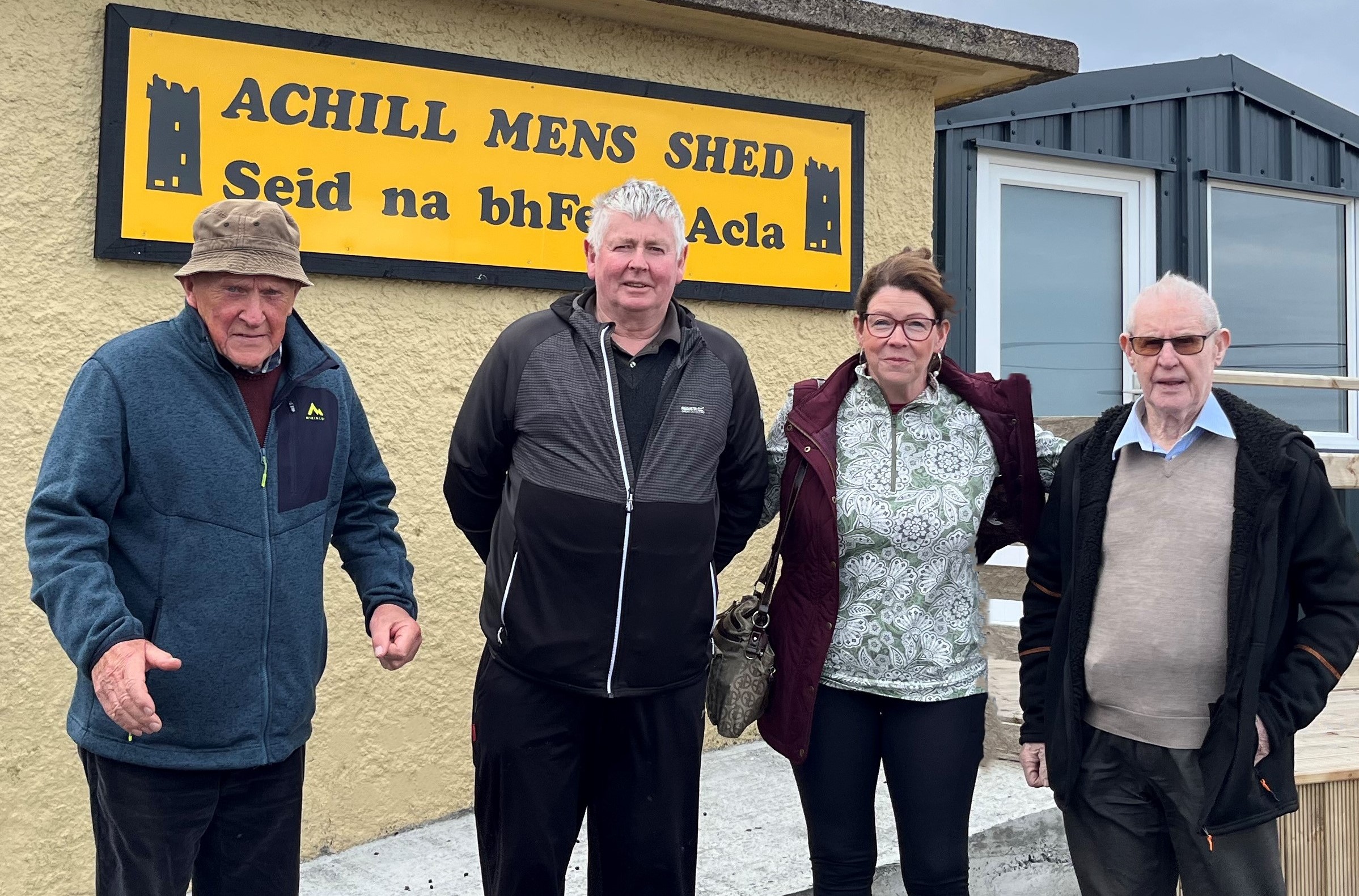 They are in some ways similar to Senior Centers in the US, in that they drive connection, and create community, and on that windswept day I learned how incredibly important that is to these gentlemen. Paddy, Sean and Seamus shared with me the reasons why they sought out the Men’s Shed, and for each of them it was all about connection, community and a sense of purpose. Being on a remote island and a very rural area, the Men’s Shed is in many ways a lifeline to the men of Achill Island. The talk that morning included current events in Ireland and the world, their experiences during COVID, the very clear understanding they have of the importance of staying connected to maintain their health, and the current community project they were engaged in, as one of them so aptly stated, “If it weren’t for this place, I’d be home staring at my four walls”. I have to say after having spent 90 minutes with these gentlemen I felt buoyed and inspired which is why I am sharing this with you. In these times of uncertainty, I hope you know just how valued you are because of what you do. What you, Senior Center Directors and Staff, do each and every day, is help to build connections and you ARE the community! Senior Centers are such vital communities of connection for the older adults you are serving. We know that older adults who participate in senior center programs experience better psychological well-being across several areas, including:
- Higher levels of health
- Increased social interaction
- Greater life satisfaction
We also know that having numerous direct connections and social interaction with people, gives older adults alternative routes to valuable resources, increasing their chances of receiving support when it is needed. Therefore, those older adults who have larger networks tend to have better health, especially with frequent interaction. In addition there’s great research on how socially connected individuals at Senior Centers and/or Senior Activity Centers are also more likely to adopt healthy behaviors such as adherence to medical treatments, as well as participation in physical and mentally stimulating programs. The work you do to support the older adults in your communities is amazing, and the impact of all this work is helping older adults in your communities to thrive, maintain good health and age in place. If our Towns and Cities did not have you, this would place the older adults in your communities at serious risk of social isolation and loneliness, and poorer health outcomes, and we know what those outcomes look like because we saw them develop during the COVID-19 Pandemic. The lack of social ties is one of the main reasons that isolation can raise the chances of premature death from all causes. It’s a risk that the CDC has reported that rivals smoking, obesity, and physical inactivity. Social isolation and fewer connections can have an impact on the brain, and a meta-analysis of 19 studies showed that older adults with low social participation—had a 41% higher risk of dementia. So thank you. Thank you for working to keep our Older Adults safe, healthy, engaged, supported, valued and connected in our communities! With the deepest respect and gratitude, Betsy
Mar 21, 2025 | Aging Matters Newsletter
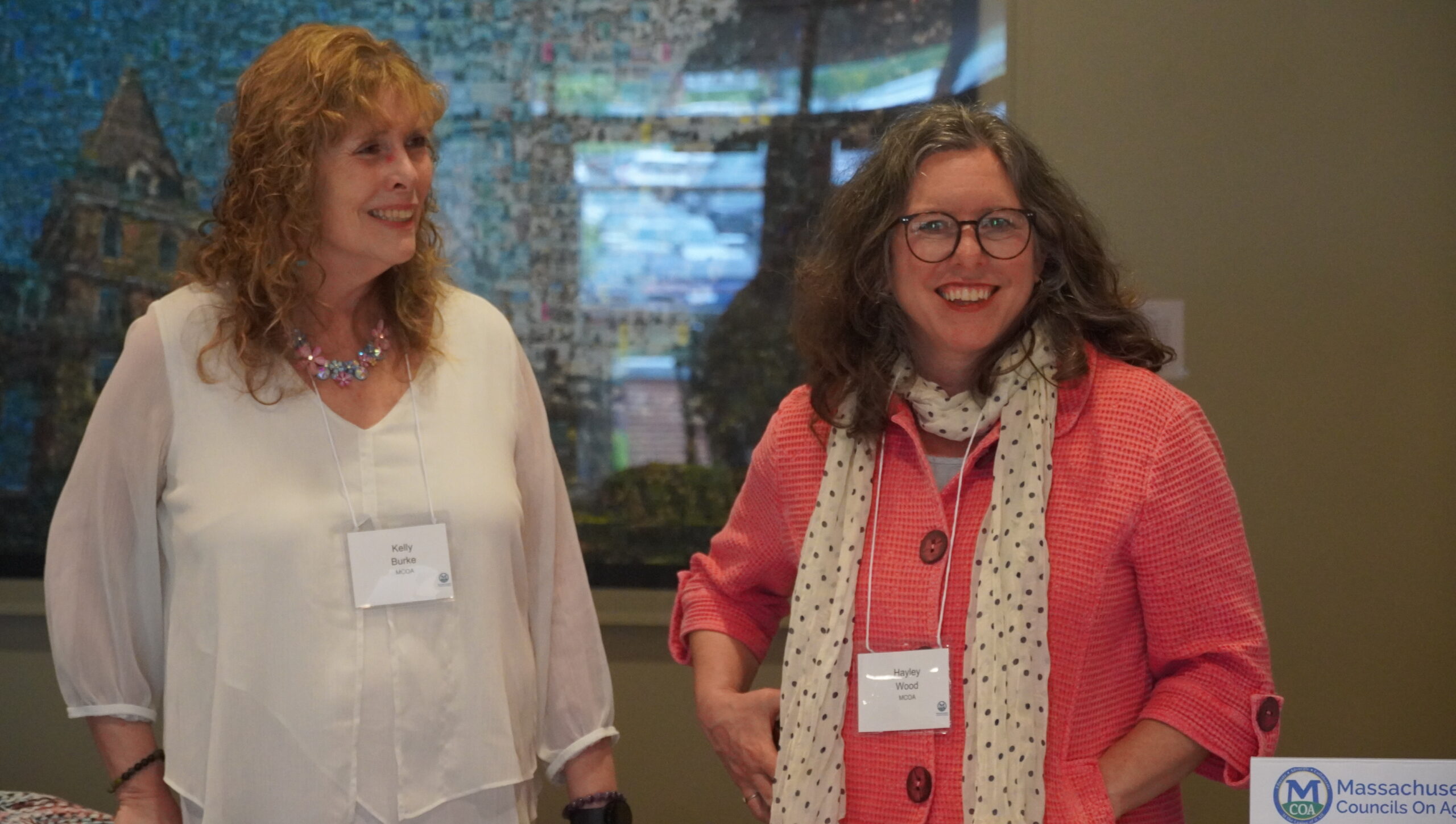
In a world often focused on challenges, it’s refreshing to hear stories of dedication, compassion, and the profound rewards of serving others. Hayley Wood, MCOA’s Economic Security and Outreach Manager, offers a unique perspective, shaped by her years as a senior center director and her deep commitment to human-centered service.
Hayley’s journey into council on aging services began with a desire to make a more direct, human impact. “I was feeling like the service I wanted to provide…I wanted it to be a little more human, centered and based on people experiencing need,” she explains. This drive helped her transition from a foundation grant officer to an Ombudsman volunteer, then a care advisor, and eventually, a dedicated outreach coordinator and senior center director.
 Her experiences painted a vivid picture of the realities faced by older adults, from transportation challenges and limited family support to the critical issue of housing. But it also illuminated the crucial role of benefits enrollment for economic security. As Hayley explains, “Outreach Coordinators and other COA staff—often directors—work one on one with community residents to access public benefits that will save them money.” She underscores that “no entity in federal, state, or municipal government is handing out money to people who need it, so COA professionals guide people who are looking for ways to spend less to important programs like SNAP for food, Home Energy Assistance Program for fuel assistance, MassHealth, and the Medicare Savings Program.”
Hayley witnessed firsthand how these programs could transform lives. “In 2024 the Medicare Savings Program, formerly known as Senior Buy In, eliminated the asset test, so many thousands more older adults are eligible to get health costs defrayed and to no longer have to pay their $185/month Medicare Part B Premium. These programs alone have the potential to save income-eligible older adults in MA thousands of dollars a year.”
 Now, in her role at MCOA, Hayley serves as a vital conduit between senior centers and broader initiatives, not just in housing but also in economic security. “MCOA creates and promotes multiple opportunities for COA staff who provide social services to learn and connect with each other,” she notes. “Our multiple partners regularly offer webinars, conferences, coalition membership, and more to our network. We help highlight those opportunities as well as devising our own ways to support the outreach sector of our network.”
Hayley recognizes the challenges older adults face in navigating these vital programs. “Every one of these programs has a distinct application and process, although MassHealth is now incorporating a SNAP application. Many older adults feel discouraged by bureaucratic processes, which are frequently poorly communicated by the agencies that lead the programs, particularly if older adults that need them are going through difficulties.”
 This is where the direct support of COAs becomes indispensable. “Outreach Coordinators, Directors, and often volunteers and the state’s Options Counselors will know eligibility requirements for all of these programs and do an initial screening with a “client,” and also help fill out applications in person, or handle an online application. COA staff often assist clients who don’t have or use computers, and they often help clients who have trouble organizing complex paperwork.” And, as Hayley points out, “COAs also host SHINE Counselors, volunteers who are trained to help Medicare enrollees compare and evaluate their options and also screen their clients for MSP and MassHealth eligibility.”
Hayley’s commitment to professional development is evident. She recognizes the dedication of senior center professionals to continuous learning and growth, especially in areas like benefit enrollment and navigating complex systems. “The appetite for opportunities to learn and talk and have also peer-to-peer conversations about complicated scenarios is so strong with this group of professionals,” she observes.
Hayley’s Advice for New Directors and Outreach Workers:
- Eat lunch with your staff and participants: “Eat lunch together,” she advises, emphasizing the importance of building community and fostering connections. “Our friendships grew, and our relationships with participants…we formed a little community at lunch every day.”
- Embrace the power of listening: “You see the value of listening. You can see someone often soften and get some relief…If you really just give a hoot, and listen, and be quiet.”
- Acknowledge and document your accomplishments: “I did a little creative journal, and I wrote a list of things that I’d done, seen and heard in the day, and I drew a little picture of myself in the scene.”
- Forge friendships: “The gift of the job is the relationships; lean into it.”
- Practice self-care: “Take some time, take an hour, and talk to someone; you deserve it.”
Key Takeaways:
- The power of human-centered service lies in building meaningful relationships and providing compassionate support to older people, including vital assistance with economic security and benefit enrollment.
- Even in the face of complex challenges, small acts of kindness and attentive listening can make a significant difference for aging adults.
- Continuous learning and professional development are essential for those serving older adults, especially in navigating complex benefit systems.
- Building community and fostering connections among staff and participants creates a supportive and enriching environment.
Hayley Wood’s story is a testament to the power of dedication, compassion, and the rewards of serving others. Her experiences remind us that even in the face of adversity, we can find joy and purpose in making a positive impact on the lives of those around us, ensuring they have access to the resources and support they need to thrive.