Jan 22, 2025 | Aging Matters Newsletter, Digital Equity
On Cape Cod, a concerted effort is underway to address the growing need for digital equity among older adults. As technology becomes increasingly essential for accessing services, staying connected, and maintaining independence, organizations across the Cape are collaborating to ensure that no one is left behind.
Maryanne Ryan, Chief Executive Officer and Laura Roskos, Development & Public Information Officer of Elder Services of Cape Cod & the Islands (ESCCI) shared insights into the work being done to bring “standardization or order” to the digital landscape for older adults on the Cape. The pandemic highlighted the urgent need for digital connection, with various initiatives popping up “organically and chaotically.” This spurred a collaborative effort to create a more structured and sustainable approach.
A key development has been the partnership with Senior Planet, the public brand of Older Adult Technology Services (OATS). The organization became part of Senior Planet’s first cohort of local licensees, adopting their curriculum developed over two decades with direct input from older adults. To effectively deliver this curriculum, they established a “fleet of laptops” with consistent operating systems for ease of instruction.
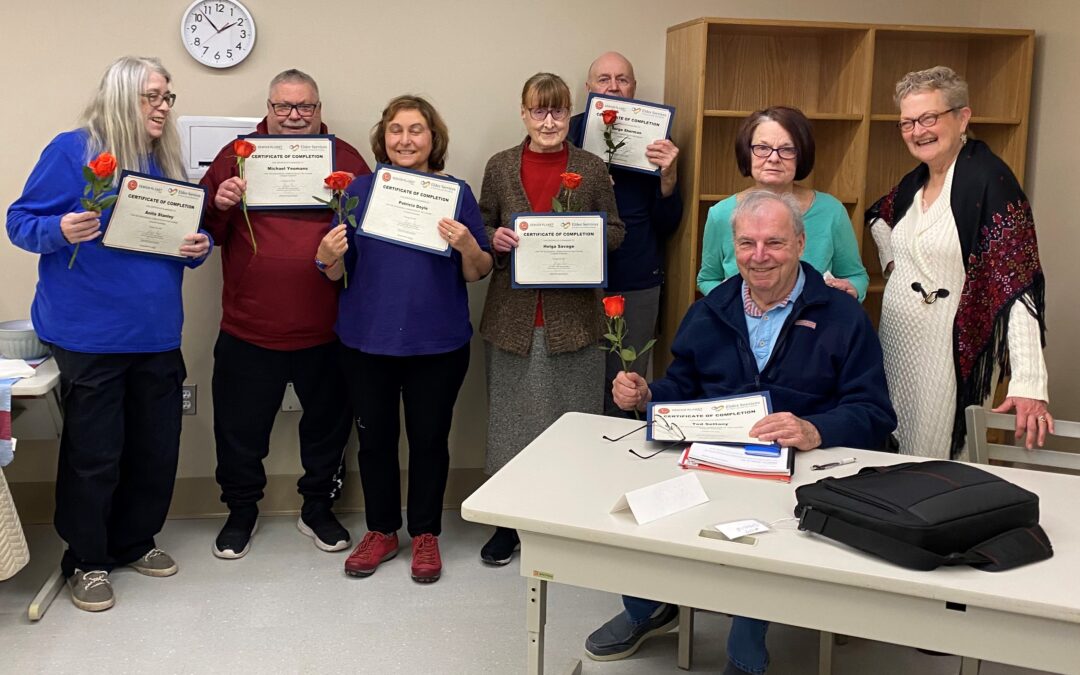
This initiative has already seen significant success. Classes have been offered at all 15 Councils on Aging (COAs) in Barnstable County, with some locations hosting multiple sessions. Laura Roskos shared a heartwarming anecdote about a participant in Yarmouth who, after just one class, expressed his newfound confidence in using technology and his excitement to show his family his progress.
 In an Orleans class, as recounted by Laura Roskos, a Spanish-speaking mother and daughter enrolled together. Roskos quickly adapted the curriculum, providing Spanish materials and support. Despite memory challenges for the mother, the class provided valuable social engagement, and the daughter benefited significantly.
The program offers a range of classes, from basic computer essentials to more advanced topics like online banking, web safety, and hosting Zoom meetings. In April, they will be offering a five-week course called “Technology for Everyday Life” and a new course on digital photography in Provincetown. The impact of these classes goes beyond simply learning technical skills. Maryanne shared a story about a woman who, while caring for her incapacitated husband out of state, was able to use the skills she learned in class to access and manage his medical records online, highlighting the essential role of digital literacy in healthcare access.
This experience led to a greater awareness of the needs of home care clients. This year, the focus is shifting towards providing more in-home tech support, recognizing that individuals with limited mobility or access to transportation face unique challenges. While the program has excelled at training people on standard operating systems and platforms, they acknowledge the need to address the more personalized nature of smartphone use and the challenges of navigating various interfaces.
Funding has been a crucial aspect of this work. The program has benefited from significant support from the Comcast NBC Universal Foundation, which has provided two separate fleets of laptops and financial assistance for three years. ARPA funding also played a role. However, as some funding sources are ending, the organization is actively pursuing new opportunities, including collaborating with the Cape Cod Commission to access funding from the Mass Broadband Institute and participating in large proposals to federal digital equity competitions.
Laura emphasized the importance of not underestimating the tech savviness of some older adults. While addressing the needs of those who are new to technology is essential, it’s equally important to provide resources and training for early adopters and those seeking to stay ahead of the curve. This proactive approach is crucial for combating emerging online scams and ensuring that older adults can fully benefit from new technologies.
 The organization recognizes the need for continuous adaptation and innovation, especially given the rapid growth of the older adult population on Cape Cod. They are committed to exploring new ways of organizing services and programs, including the use of Virtual Video Conferencing, a type of telehealth that uses real-time videoconferencing to provide care remotely. Patients can use any computer, tablet, or mobile device to receive care. This technology allows for more frequent check-ins and supports independent living.
A key factor in the program’s success has been the strong partnerships with local Councils on Aging (COA) and other community organizations. Recognizing the importance of coordinated action, Healthy Aging Cape Cod (HACC), the Barnstable County-led regional Age Friendly initiative, has established a dedicated digital equity working group.
Maryanne highlighted the essential role of COAs and community centers in this effort, emphasizing the strong two-way street relationship that has been built. The collaborative spirit and the focus on fostering independence are central to the program’s mission.
Key Themes and Takeaways:
- Responding to Evolving Needs: The program has adapted and evolved in response to the changing needs of older adults and the rapid pace of technological advancements.
- Partnerships and Collaboration: Strong partnerships with COAs, community organizations, and funders are essential for the program’s success.
- Focus on Independence: The program aims to empower older adults to maintain their independence through technology, enabling them to access services, stay connected, and manage their own affairs.
- Addressing a Spectrum of Needs: The program recognizes the diverse range of digital literacy levels among older adults and provides training and support for both beginners and more advanced learners.
The story of digital inclusion on Cape Cod is one of adaptation, collaboration, and a deep commitment to serving the needs of an aging population. It’s a reminder that bridging the digital divide is not just about providing access to technology, but about fostering human connection and empowering individuals to live full and independent lives in a rapidly changing world.
Nov 22, 2024 | Economic Security & Outreach Blog, Public Health
I have a friend who is an audiologist, so when I recently saw an advertisement for using the Apple AirPod Pro 2 as a hearing aid, I decided to ask her if she knew anything about its performance, since it seems to be a cost-effective option ($259 at the time of this writing). She tested the product, wrote the following summary of her experience, and gave me permission to share it.
I’ve fooled around with my AirPods to test this out. I programmed a mild high-frequency hearing loss in, and then evaluated the sound that the AirPods were outputting, and they actually did a pretty good job! I was surprised. There are some downsides:
- You’ll get the best results by having an actual hearing evaluation so you know that the numbers you are giving the AirPods are correct (they ask for input from a hearing test). If someone hasn’t had their hearing tested, there are free apps that Apple recommends, but I think the jury is out on how accurate those “over the phone” tests actually are.
- Comfort. You have to have a good fit with the earbuds, or it just won’t work.
- You have to be technically savvy enough to figure it out. I am technically savvy, and I had to do a lot of messing around to figure out how to make it work.
- Your ears are completely plugged up by the AirPods. There’s no air-flow in or out of the canal. They do a pretty good job about not making your voice sound like it’s bottled up in your head, but other body sounds are magnified. When I’m walking with my AirPods in, I hear the loud thump, thump, thump of my feet hitting the ground. It’s a little weird, but I’m sure you’d get used to it.
- The battery life is not great. You get maybe 4 hours out of them. So they are really only good for situational use. Like… I’m going out to dinner and I won’t be able to hear. Definitely not putting them on in the morning and having corrected hearing all day long.
- You will look to the rest of the world like you don’t want to interface with them because you have your AirPods in.
All that being said, they seemed to do a good job, and for someone who is looking for situational help with mild hearing loss, I think they are by far the best option on the market, and the price is right!
Review by Dr. Sarah Moore, AUD
Nov 1, 2024 | Chronic Diseases, Economic Security & Outreach Blog, Fitness, Healthy Aging, Malnutrition, News, Nutrition
Important HIP News
Yes, it’s true. DTA announced it’s lowering the monthly HIP benefit for ALL SNAP households to $20 per month, starting December 1, 2024, so the program can run all year long. The program needs $25 million annually but was only funded at $15 million in the FY2025 budget. Learn how to maximize your SNAP benefits.
The Massachusetts Food System Collaborative’s Campaign for HIP Funding released a call to action asking advocates to call the Governor’s office and legislative leadership (Speaker of the House Ron Mariano, HWM Chair Aaron Michlewitz, Senate President Karen Spilka, and SWM Chair Michael Rodrigues), asking them to urgently dedicate $10 million in supplemental funding for HIP and to stop the cut. Email Rebecca Miller, Policy Director at the Massachusetts Food System Collaborative, at rebecca@mafoodsystem.org with any questions about this advocacy alert.
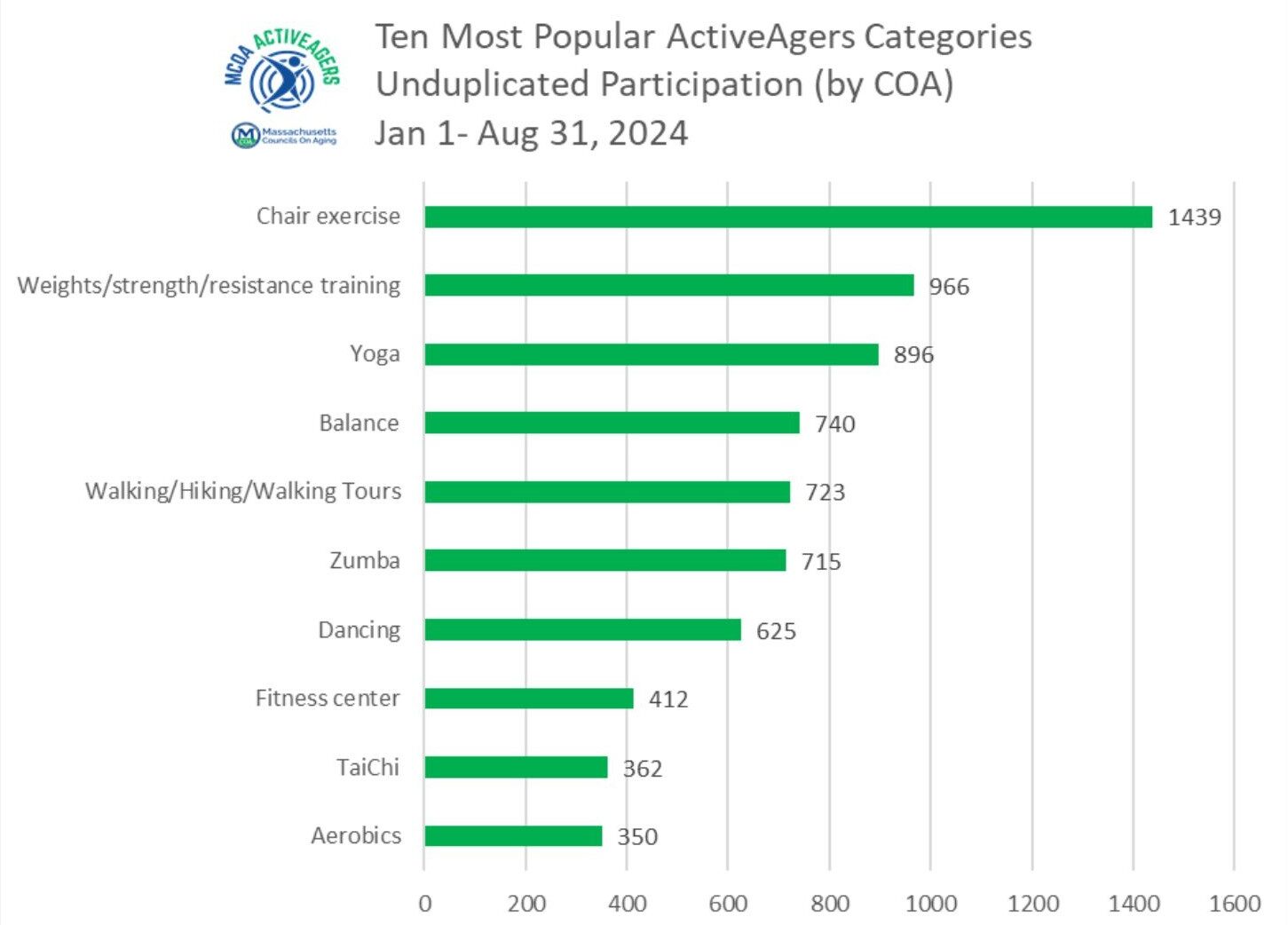
MCOA ActiveAgers runs all year long
Check out the (current) top ten statewide physical activity categories.
Even if you missed the September 15 deadline, you can still submit your data dating back to January 1. The more data we have, the more robust a picture we can share with the network. Even better, the second round of data covering September 1 – December 31 is eligible for prize drawings.
Review the MCOA ActiveAgers Toolkit or email tara@mcoaonline.org with questions.
Free Webinar Series
Prioritizing What Matters to Older Adults Living with Chronic Disease: This National Center for Equitable Care for Elders learning collaborative webinar series focuses on age-friendly approaches to encourage the development and maintenance of healthy lifestyle behaviors in older adults. Participants will discuss special considerations for chronic disease self-management in an aging population, including physiological changes and social risk factors. Upon application, you will receive the session 1 recording and slides– and join us live for sessions 2-4. Session Two: November 5; Session Three: November 19; Session Four: December 3, 2024. All sessions 2-3 p.m.
Older Adults Meal Funding is in Jeopardy (NANASP Updates)
- This is a crucial time for NANASP members to communicate with their Members of Congress, and share local data and stories from clients on the impact of funding challenges. Find your representatives here. In this current fiscal year, we have the first reduction in the Older Americans Act nutrition program in years with an $8 million overall cut. Neither the Senate nor the House proposal has restored this cut. This has to happen. Here’s what you can do:
- Your Voice Matters! Take our survey to share the impact of funding cuts on your program and clients. Your response is CRUCIAL for our advocacy efforts.
- Write to your Members of Congress to share with them how vital your program and services are for their older constituents. Make sure to share data and testimonies from your clients.
- NANASP and Meals on Wheels America, submitted a letter with 63 other national organizations to Congressional leadership advocating for $200 million in emergency (non-disaster) funding before the end of the year to address the growing waitlists for OAA senior nutrition programs. This funding would provide nearly 75 million additional meals and serve almost 650,000 more older adults. Congress is slated to return November 12th and has a lot on its plate. It has just one month to approve FY25 appropriations bills before the current Continuing Resolution expires on December 20th. The CR holds funding for all programs at FY24 levels and we are hoping for increased funding in the final FY25 bill.
- While we’re advocating for increased funding in FY25, there’s still money on the table your program may be eligible for. Pandemic-era State and Local Fiscal Recovery Funds (SLFRF) under the American Rescue Plan Act (ARPA) will disappear on December 31 if not used! This was allocated to state, local, Tribal, and territorial governments to use in providing assistance to nonprofits and others. What you can do: Use the National Council of Nonprofits’ guide to secure remaining funds before the December 31 deadline! This is separate from OAA-specific ARPA funds disbursed by State Units on Aging, which we will have an update on in our next bulletin.
Oct 4, 2024 | Economic Security & Outreach Blog, Health Insurance, Medicare, News
 Chances are if you’re an Outreach Coordinator you’ve helped someone with a MassHealth application: a daunting task under any circumstance.
The Massachusetts Health Care Training Forum provides regularly updated information via trainings to staff members of community-based agencies—including COAs—and health care organizations. Their trainings cover topics that either are directly related to MassHealth or are adjacent.
The MHCTF website hosts webinar videos and slide shows from past presentations such as:
- How to Apply for Long Term Care
- MassHealth 2023-24 Redeterminations and Renewals
- Understanding the Medicare Savings Program
- Understanding Immigration Requirements and Application Completion for Health Insurance Coverage in MA
There are opportunities to register for their live, virtual meetings. October’s offerings that could be useful to Outreach Coordinators and SHINE Counselors are:
- MassHealth & Health Safety Net Updates
- Medicare in 2025
- Disability Evaluation Services Overview & MassHealth
Click here to register for the MTF meetings
Sep 13, 2024 | Digital Equity, News
 The digital divide experienced by many older adults in MA and the epidemic of loneliness have at least one relationship: access to one would alleviate the other. That is, the availability of low-cost, high-speed internet service would greatly increase human to human connectivity of isolated older adults. Another synergy that some COAs in MA are already utilizing is connecting young people—teens or college-age young adults—with older adults to provide tutorials in tech skills.
Little Brothers Friends of the Elderly in Boston is doing just that in public senior housing complexes. In their words, “LBFE Boston helps prevent social isolation by offering free, intergenerational, digital equity, and arts programs to older adults in public/affordable senior housing and community centers.” Tech access and training provides benefits such as mental stimulation, reduced isolation, empowerment, and skills needed for the job market, transportation, navigating medical appointments & records, and more.
Their Digital Dividends program offers instruction in Zoom, Google Maps, Uber/Lyft, AI tools, G-Suite (including Gmail), and Microsoft Office applications. Classes are held once a week for an hour, Monday through Friday, typically between 12 PM and 5 PM. Each older adult receives a free laptop and reliable internet access. With the support of younger participants, they build and expand their tech knowledge. In 2023 alone, Digital Dividends conducted more than 222 digital literacy training sessions in both English and Spanish. For a closer look, check out this recent story about one of their programs in South Boston.
Digital Dividends has been supported by a grant from the Massachusetts Broadband Institute and the state, administered through the Digital Equity Partnerships Program. Funds from this grant paid for Chromebooks and mobile hotspots for the older adult participants in these classes.
The need for programs like this is even more acute now that the federally funded Affordable Connectivity Program has come to an end (April 2024). COA staff serve people who lack personal access to high speed internet, and they see the disadvantages that come with that. A leader in this arena is the MA Healthy Aging Collaborative, which offers quarterly meetings on the topic of older adults and technology access, to which COA staff members are welcome.
Sign up for their newsletter to stay tuned for meeting dates, and check out the MHAC blog, which regularly offers pieces on digital equity and technology access for older adults. If you want to grow your understanding of this issue and what’s currently being done in Massachusetts to help older adults gain affordable broadband access and other important connectivity resources, read the Community Resources Guide: Technology Access and Programming for Older Adults (Sept. 2021).
Is your COA working on enhancing digital equity for older adults in your community? Are you harnessing the power of young people for this work? We’d love to learn about your creative efforts on MCOA’s InfoHub Forum!
Note: Photo used with the permission of LBFE Boston.
Aug 23, 2024 | Economic Security & Outreach Blog, Employment, Part Time
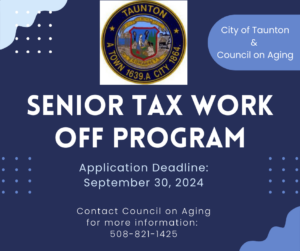 Many but not all communities in Massachusetts offer a tax-abatement option to homeowners: the Senior Citizen and Veterans Tax Work-Off programs, which provide opportunities for residents to perform a job for the municipality at minimum wage (currently $15/hour) in order to see a reduction—based on what they earned—in their property tax bills. The maximum abatement defined in the state law for people 60 and older is $2,000, and the maximum abatement for Veterans, as defined in the state law for that program, is $1,500.
Often, COA Directors or other COA staff members and Town/ City Assessors work in partnership to organize these programs and spread the word to residents. Together they create a system for applications, eligibility screening, and the matching of qualified residents with jobs that have been determined by municipal department heads ahead of time. Municipalities determine their own income eligibility guidelines.
The best programs offer several job opportunities in various departments—and ideally the jobs will draw upon diverse skill sets, maximizing appeal to the public.
If you are already involved with this program, you’ve probably started asking for job descriptions from your municipal colleagues (my experience has led me to believe that you can’t start too early). If your municipality does not have either program yet and you want to start one, consult with your Town Manager/Town Administrator/Mayor. These programs are voted in by City Councils, Select Boards, and other authorizing officials.
It’s easy to find model program guidelines all over the state—and they do differ from community to community. Just Google “Senior Tax Work Off MA” (or “Veterans Tax Work Off MA”) and many communities’ program guidelines will come up.
These programs are an effective way of creating lasting, positive relationships with community participants. They can be the means of getting some help that your budget may not allow, such as Memory Café leadership, Age- and Dementia-Friendly Action Team leaders, meal deliverers, receptionists, greeters, etc. If you can dream it up, it’s possible!
Aug 16, 2024 | Economic Security & Outreach Blog, Housing, Mental Health

Our behavioral health colleagues at the MA Association of Mental Health (MAMH) received a two-year grant from the Massachusetts Community Health and Healthy Aging Funds that will enable the MA Hoarding Resource Network to focus on stabilizing housing and strengthening eviction prevention for people living with hoarding disorder. The initiative will involve people with lived experience and other stakeholders and professionals working in housing, aging, behavioral health, human services, public safety and code enforcement, and academic researchers. They will collaborate and craft strategies for broad environmental and systemic change, working towards nuanced community responses to assisting MA residents whose housing is at risk.
The MAMH has created a webpage with a blog about the project, and they welcome ideas and information about relevant resources that you might know about.
The MAMH project coordinator for this is Cassie Cramer, who is also the project director of the Older Adult Behavioral Health Network.
For our September 12 Outreach Zoom Meeting, Cassie will conduct a listening session, seeking insights from COA staff members about assisting older residents whose accumulated belongings pose a danger and could lead to eviction or their homes being deemed uninhabitable.
Aug 12, 2024 | Economic Security & Outreach Blog, Fitness, Healthy Aging, Legislative Alerts, Nutrition
How do you participate in ActiveAgers?
We’re receiving this question often and thrilled to see the interest! If you’re running any physical activity programs through your center, you’re essentially participating. To make it official, submit a summary of your classes with participation numbers (not names). All you need to do is export a report of your physical activity program from the software you’re using (My Senior Center, ServTracker, etc.)
We are collecting your data in two phases so we can hold two raffle drawings this year. Submit your first report by September 15. This report covers January 1 – August 30. See p.4 in the toolkit for more information. Winners will be drawn mid-September.
Remember to share your fitness stories online and use #ActiveAgers so we can easily find everyone across the state!
Contact Tara@mcoaonline.com 413-923-2160 with questions.
Action Alert for OAA Reauthorization Act of 2024!
We have the first reduction in the Older Americans Act nutrition program in years with an $8 million overall cut. Neither the Senate nor the House proposal has restored this cut. Convey your personalized message that cuts hurt! As there is no House bill, ask them to co-sponsor or publicly support S4776.
If your COA provides SNAP outreach or assistance, you can become a community partner and receive reimbursement for your efforts. If aren’t doing so but are interested, this message is also for you! Monthly SNAP Community Partner webinars are offered through UMass Medical. Contact and answer all your questions. Contact Jayna Mistry at snap@umassmed.edu, 508-856-3139
SNAP Restaurant Meals Program Pilot
There are now fourteen restaurants and food truck statewide accepting SNAP benefits as payment. Six more are becoming certified. Search here to find an establishment near you.
Jul 19, 2024 | Age & Dementia Friendly, Housing, News

The mic-drop moment at the July 11 Outreach meeting was when the presenter, Tim O’Reilly, who manages building projects for Backyard ADUs, shared that Massachusetts’ Home Modification Loan Program (HMLP) will provide 0% interest loans of up to $50K to eligible households for the building of accessory dwelling units.
Older or disabled adults who are interested in making changes to their homes to increase their long-term, at-home independence, may apply to the program.
Additionally, household members who are not disabled or over 60 can submit applications for home modifications or the creation of accessory dwelling units (free-standing or in the existing home) that will aid older adults or people with disabilities in their households.
Distinct from a home repair program, HMLP provides loans that support projects that may include: ramp and lifts, bathroom and kitchen adaptations, sensory integration spaces, fencing, and, as noted, accessory dwelling units. It’s all about increasing accessibility.
The HMLP is administered for the state by the Community Economic Development Assistance Corporation (CEDAC), which in turn has delegated the processing of applications to regional agencies. For a list of regional provider agencies and eligibility and application information, see the program brochure.
More general information on the program can be found on CEDAC’s HMLP webpage.
2023 Income Limits
| Household size |
Maximum Annual Income |
| 1 |
$207,800 |
| 2 |
$237,600 |
| 3 |
$267,200 |
| 4 |
$296,800 |
| 5 |
$320,600 |
| 6 |
$344,400 |
| 7 |
$368,200 |
| 8 |
$391,800 |
Jul 5, 2024 | Housing, Mental Health, News, Resource finding
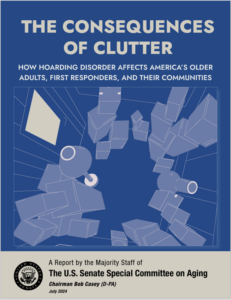 Some may remember that in March of this year the US Senate’s Special Committee on Aging distributed an RFI, seeking written testimony from people with lived experience and other stakeholders on the effects of hoarding. Committee members have finished their report, and responses from Massachusetts were strong. You can read or download the report here:
The Consequences of Clutter: How Hoarding Disorder Affects America’s Older Adults, First Responders, and their Communities
The report is long; one way to dip in is to start with the statements from people in Massachusetts—all of the pieces of the report are conveniently hyperlinked in the table of contents, and you can search for any word using ctrl/F on your keyboard. You will probably recognize some names of well-known hoarding disorder advocates and experts from MA. The statement written by members of the MA Hoarding Resource Network Steering Committee can be found on page B-106.
There are several statements from task forces around the country, and federal support for hoarding task forces is the top recommendation in the report:
SAMHSA and ACL should provide training, guidance, and technical assistance
regarding HD. Although HD is relevant to the mission of the Substance Abuse
and Mental Health Services Administration (SAMHSA) and the Administration for
Community Living (ACL), neither agency identified programs specific to the con-
dition. SAMHSA and ACL should develop training, technical assistance, and other
guidance for social service providers, health care providers, and first responders
on how to respond to HD. Technical assistance should include tips and training for
professionals likely to encounter people with HD. Technical assistance should also
include guidance for communities on establishing a coordinated, evidence-based
response to HD – including best practices for forming and sustaining hoarding task
forces (page 43)
The statements from people living with hoarding disorder are particularly powerful and support the idea that with consistent, skilled assistance, people living with this disorder can make meaningful change in their lives.