Oct 17, 2024 | Age & Dementia Friendly, News, Public Health
We all know what it’s like to be mired in the day-to-day demands that make it increasingly hard to see the forest for the trees and to maintain the vitality of our connection to the meaning of our work.
But there are unique ideas and programs aiming to improve how we build a society that is livable for older adults that are brilliantly worthy of our attention. They encourage us to slow down and take the time to grow our compassion through the extraordinary experiences of others.
A couple programs of this nature came to my attention in the past week: Gold Coats and the living experiment that inspired the Human Forever documentary film (2024).
 Gold Coats
The Gold Coat program, based at the California Men’s Colony State Prison in San Luis Obispo, trains inmates to provide a high standard of care for their fellow inmates who are living with dementia and other cognitive disorders. Testimony from the Gold Coats provides extremely moving insight about the power of caring for others in the most trying circumstances.
Human Forever
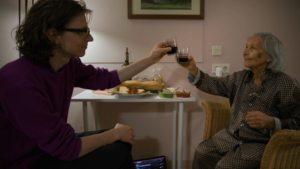 Teun Toebes, a 25-year-old Dutch nursing student and now an international spokesperson on dementia and healthcare innovation, lived in a closed ward memory care unit in a Dutch nursing home for three years. He wrote a book about that experience and then toured the world with independent filmmaker Jonathan de Jong to learn about international models of care and to create the film Human Forever (2024).
Teun Toebes’ book about his experiences: The Housemates: Everything One Young Student Learnt about Love, Care and Dementia from Living in a Nursing Home
Go ahead—give yourself permission to learn a little bit about creative and innovative ways to provide care and special experiences for people living with dementia.

Aug 26, 2024 | Education & Training, Falls Prevention, Fitness, Healthy Aging, Malnutrition, Member Services, Nutrition, Public Health
ActiveAgers data is due in only a few weeks (September 15)! Remember to submit your data covering Jan 1 – Aug 30 to be eligible for individual and COA prizes. See p. 4 for details. Email them (and any questions) to tara@mcoaonline.org Kudos to those who already submitted reports!
Feeding America Research Finds nearly 12 million adults 50+ experienced food insecurity in 2022. New research from Feeding America “estimates 1 in 11 [60y+] faced hunger in the United States in 2022.” These numbers are up from the previous year, and food insecurity can greatly impact the way we age. Nationwide, this percentage is 8.7% and in Massachusetts it’s 7.1%.
Malnutrition Awareness Week is September 16-20 – Use the special code MAW-MCOA to access complimentary webinars. Additional resources on ASPEN’s Spread the Word page to help you plan and promote Malnutrition Awareness Week include:
-
- A tip sheet and ambassador success stories for organizing MAW activities
- A media toolkit with tips for contacting local newspapers and TV and radio stations, a press release template, and prepared public service announcements (PSAs)
- Malnutrition Awareness Week stickers (PDF) in English, Spanish, and Portuguese. And if you’re in the U.S. or Canada, you can order pre-printed stickers by filling out this form.
How HIP Works: We are deep in produce harvest and farmers’ market season. Remember, if one has SNAP benefits, they automatically receive HIP benefits which boost purchases on fruits, vegetable, etc. Check out the video for a refresher on the program.
Falls Prevention Week is September 23-27 – In addition to NCOA’s toolkit, remember to access the free Stepping Up Your Nutrition workshop leader training.
An eLearning Library from the National Center for Equitable Care for Elders – includes modules such as:
Aug 16, 2024 | Economic Security & Outreach Blog, Housing, Mental Health

Our behavioral health colleagues at the MA Association of Mental Health (MAMH) received a two-year grant from the Massachusetts Community Health and Healthy Aging Funds that will enable the MA Hoarding Resource Network to focus on stabilizing housing and strengthening eviction prevention for people living with hoarding disorder. The initiative will involve people with lived experience and other stakeholders and professionals working in housing, aging, behavioral health, human services, public safety and code enforcement, and academic researchers. They will collaborate and craft strategies for broad environmental and systemic change, working towards nuanced community responses to assisting MA residents whose housing is at risk.
The MAMH has created a webpage with a blog about the project, and they welcome ideas and information about relevant resources that you might know about.
The MAMH project coordinator for this is Cassie Cramer, who is also the project director of the Older Adult Behavioral Health Network.
For our September 12 Outreach Zoom Meeting, Cassie will conduct a listening session, seeking insights from COA staff members about assisting older residents whose accumulated belongings pose a danger and could lead to eviction or their homes being deemed uninhabitable.
Aug 12, 2024 | Economic Security & Outreach Blog, Fitness, Healthy Aging, Legislative Alerts, Nutrition
How do you participate in ActiveAgers?
We’re receiving this question often and thrilled to see the interest! If you’re running any physical activity programs through your center, you’re essentially participating. To make it official, submit a summary of your classes with participation numbers (not names). All you need to do is export a report of your physical activity program from the software you’re using (My Senior Center, ServTracker, etc.)
We are collecting your data in two phases so we can hold two raffle drawings this year. Submit your first report by September 15. This report covers January 1 – August 30. See p.4 in the toolkit for more information. Winners will be drawn mid-September.
Remember to share your fitness stories online and use #ActiveAgers so we can easily find everyone across the state!
Contact Tara@mcoaonline.com 413-923-2160 with questions.
Action Alert for OAA Reauthorization Act of 2024!
We have the first reduction in the Older Americans Act nutrition program in years with an $8 million overall cut. Neither the Senate nor the House proposal has restored this cut. Convey your personalized message that cuts hurt! As there is no House bill, ask them to co-sponsor or publicly support S4776.
If your COA provides SNAP outreach or assistance, you can become a community partner and receive reimbursement for your efforts. If aren’t doing so but are interested, this message is also for you! Monthly SNAP Community Partner webinars are offered through UMass Medical. Contact and answer all your questions. Contact Jayna Mistry at snap@umassmed.edu, 508-856-3139
SNAP Restaurant Meals Program Pilot
There are now fourteen restaurants and food truck statewide accepting SNAP benefits as payment. Six more are becoming certified. Search here to find an establishment near you.
Jul 5, 2024 | Housing, Mental Health, News, Resource finding
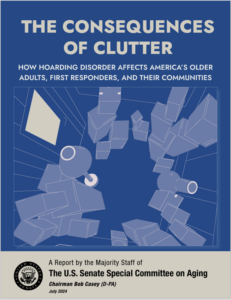 Some may remember that in March of this year the US Senate’s Special Committee on Aging distributed an RFI, seeking written testimony from people with lived experience and other stakeholders on the effects of hoarding. Committee members have finished their report, and responses from Massachusetts were strong. You can read or download the report here:
The Consequences of Clutter: How Hoarding Disorder Affects America’s Older Adults, First Responders, and their Communities
The report is long; one way to dip in is to start with the statements from people in Massachusetts—all of the pieces of the report are conveniently hyperlinked in the table of contents, and you can search for any word using ctrl/F on your keyboard. You will probably recognize some names of well-known hoarding disorder advocates and experts from MA. The statement written by members of the MA Hoarding Resource Network Steering Committee can be found on page B-106.
There are several statements from task forces around the country, and federal support for hoarding task forces is the top recommendation in the report:
SAMHSA and ACL should provide training, guidance, and technical assistance
regarding HD. Although HD is relevant to the mission of the Substance Abuse
and Mental Health Services Administration (SAMHSA) and the Administration for
Community Living (ACL), neither agency identified programs specific to the con-
dition. SAMHSA and ACL should develop training, technical assistance, and other
guidance for social service providers, health care providers, and first responders
on how to respond to HD. Technical assistance should include tips and training for
professionals likely to encounter people with HD. Technical assistance should also
include guidance for communities on establishing a coordinated, evidence-based
response to HD – including best practices for forming and sustaining hoarding task
forces (page 43)
The statements from people living with hoarding disorder are particularly powerful and support the idea that with consistent, skilled assistance, people living with this disorder can make meaningful change in their lives.
May 29, 2024 | Fitness, Healthy Aging
 MCOA’s ActiveAgers (ActiveAgers) is an exciting new initiative aimed at promoting physical activity and enhancing the quality of life for seniors across Massachusetts. This program shines a spotlight on the diverse and dynamic fitness programs offered by local Councils on Aging (COAs), centers for active living, and senior centers. By bringing together these programs under the ActiveAgers umbrella, MCOA aims to create a supportive community focused on health, wellness, and active living for seniors.
A Collective Approach to Wellness
ActiveAgers is more than just a fitness program; it is a collective movement that recognizes and rewards participation, welcomes individuals of all abilities, and celebrates the efforts of COAs and their participants. The initiative is built on the existing work of COAs, enhancing and expanding their physical activity offerings.
How ActiveAgers Works
- Run Physical Activity Programs: COAs continue to operate their physical activity programs, which can include a variety of activities such as yoga, walking clubs, dance classes, and more.
- Submit Participation Data: COAs track and submit data on participation, helping to measure the program’s reach and impact.
- Get Ready to Win: Participation is recognized and rewarded. COAs and individuals can earn accolades and incentives for their involvement and achievements.
- Celebrate: Celebrate the collective accomplishments and the positive impact on community health and well-being.
Resources and Support
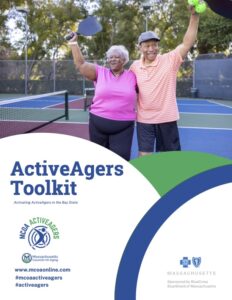 The ActiveAgers Toolkit 2024 is a comprehensive resource designed to support COAs and participants. It includes:
Program Guidelines: Detailed instructions on how the program works.
Messaging Samples and Ideas: Tools for COAs to promote their programs and engage participants.
Participant Resources: Information and tips for individuals to get the most out of their involvement in ActiveAgers.
Join the Movement
We invite all seniors and COAs across Massachusetts to join the ActiveAgers initiative. Together, we can create a vibrant community of ActiveAgers, dedicated to living healthier, more active lives. Let’s get moving and celebrate the strength and spirit of our senior community!
For more information and to get involved, contact Tara Hammes or contact your local COA.
May 17, 2024 | Economic Security & Outreach Blog, Housing, PACE

Photo of St. Therese Apartments in Everett by ROBERT UMENHOFER
Some PACE Centers in Massachusetts have special partnerships with housing entities, local housing authority- and privately owned properties that contain a variety of unit-styles, including rooms in congregate homes with shared amenities (such a kitchens, living rooms, and bathrooms).
Considerations for Combining PACE with Housing, a 2022 report developed by MassPACE, LeadingAge MA, the EOEA, and MassHealth, discusses the potential for meaningful partnerships and unit-set-aside agreements. Note: their report does not include information about Assisted Living units and their possible connections with PACE programs. The main intended audience for this report is housing authority administrative personnel. You can always forward it to your local housing authority.
If you are working with a client and/or their family members who is already a PACE enrollee or could be PACE-eligible and benefit from independent housing options, the best starting point is contacting the PACE program affiliated with housing, but staff involved with tenant selection at housing authorities should also be able to provide details on how they maintain a PACE waiting list. Housing authorities and management companies are still the gatekeepers and in charge of tenant screening and selection, but learning how to place a client on a waiting list for specific PACE-set-aside units will increase options for PACE enrollees.
The following is a selection of the properties and their partner PACE Centers listed in that report (2022):
Apr 5, 2024 | Economic Security & Outreach Blog, Health Insurance, PACE

Programs of All-Inclusive Care for the Elderly (PACE) are in sites spanning most of Massachusetts. They offer a strong opportunity for high-needs older adults to receive all the medical and social services they need in one place while continuing to live in their homes.
PACE offers transportation to their sites where doctors, specialists, clinicians, and other service-providers are available in a uniquely efficient and easy-to-access way. PACE also offers memory care day programs, meals, and social activities for people with and without memory impairment. PACE programs can also provide home care!
PACE was designed to provide a way for older adults to maintain independence while having their medical needs met at one site.
Eligible applicants must be clinically eligible for nursing home care, and they tend to be “dual-eligibles”: people eligible for both MassHealth Standard and Medicare (there is no cost to being in the program for these enrollees). PACE enrollment specialists assist applicants and families with the application process. More often than not, PACE is an option for extremely low-income clients with income below 300% of the Federal SSI rate and assets under $2,000. People over the financial eligibility threshold for MassHealth Standard can pay a monthly premium to be in PACE. For married applicants, the non-applying spouse’s income and assets are not counted, as with the Frail Elder Waiver.
As beneficial as it is, PACE can be a tough sell. Many older adults, particularly those living with dementia, are not at ease boarding a van and leaving their homes for an institutional setting, even just one day a week. If you are working with a client whom you suspect would be a good candidate for PACE, involving caregivers or other family members can be one strategy: if you have a chance to describe the benefits of PACE to a caregiver who will get some much-needed respite from the program, that approach may pave the way.
PACE can also provide a means of securing supportive housing. For more information on this, see pages 9-16 in the 2022 report created by MassPACE, LeadingAge Massachusetts, and the EOEA, Considerations for Combining PACE with Housing.
PACE is an evolving program, open to new partnership opportunities that increase access to its services by partnering with natural allies like AAAs, ASAPs, and community health centers. One such collaborative PACE site is Element Care in Lynn, a partnership between Greater Lynn Senior Services and Lynn Community Health Center.
Want to learn more about it so that you are comfortable talking about this option with your community? A newly developed, self-paced, web-training is available!
Mar 29, 2024 | Fitness, Healthy Aging
It’s that time of year where we usually launch the Walk Massachusetts Challenge. While we always support walking, we’re expanding the annual physical activity program celebrating your efforts at the local level. May we introduce, MCOA’s ActiveAgers program!
MCOA ActiveAgers is a statewide umbrella under which councils on aging (COAs) can execute their own fitness-related challenge. Each COA may create or identify an existing fitness program encouraging regular activity. Programs must run for a minimum of one day for four consecutive weeks in calendar year 2024.
The MCOA Active Agers program:
While we’re officially launching this in April, eligible programs run since January 1 (and their participants) are eligible for prizes. Gather up your data and stay tuned for submission instructions and more information.
We look forward to celebrating all the ActiveAgers this year!
For questions, contact Tara Hammes at tara@mcoaonline.com.
Mar 22, 2024 | Healthy Aging, Malnutrition
As we wind down National Nutrition Month (NNM®), let’s remember good nutrition is important at every life stage. Being well nourished is key to healthy aging. After all, who doesn’t want to avoid chronic diseases, falls, hospitalizations and more?
Here you will find resources for personal and professional use, for sharing, for learning and for enjoying. Begin with the NNM® Eating Right Tips for Older Adults.
Make every month nutrition month by using our Nutrition News You Can Use resources. Here you’ll find monthly text, recipes and photos highlighting a specific nutrient, condition or observance. Use the information as is to educate, or as inspiration for related programming. Check out what’s on deck and reach out with questions!
April – Arab American Heritage Month
During the month of April, the Arab American Foundation celebrates the culture and achievements of Arab Americans across the nation. Read/Download
May – Celiac Disease Awareness Month
Since May is Celiac Disease Awareness Month it’s a great time to tackle misinformation that surrounds the gluten-free diet and celiac disease. Read/Download
June – Beet Season
Summer is officially here and so are beets. Read/Download